
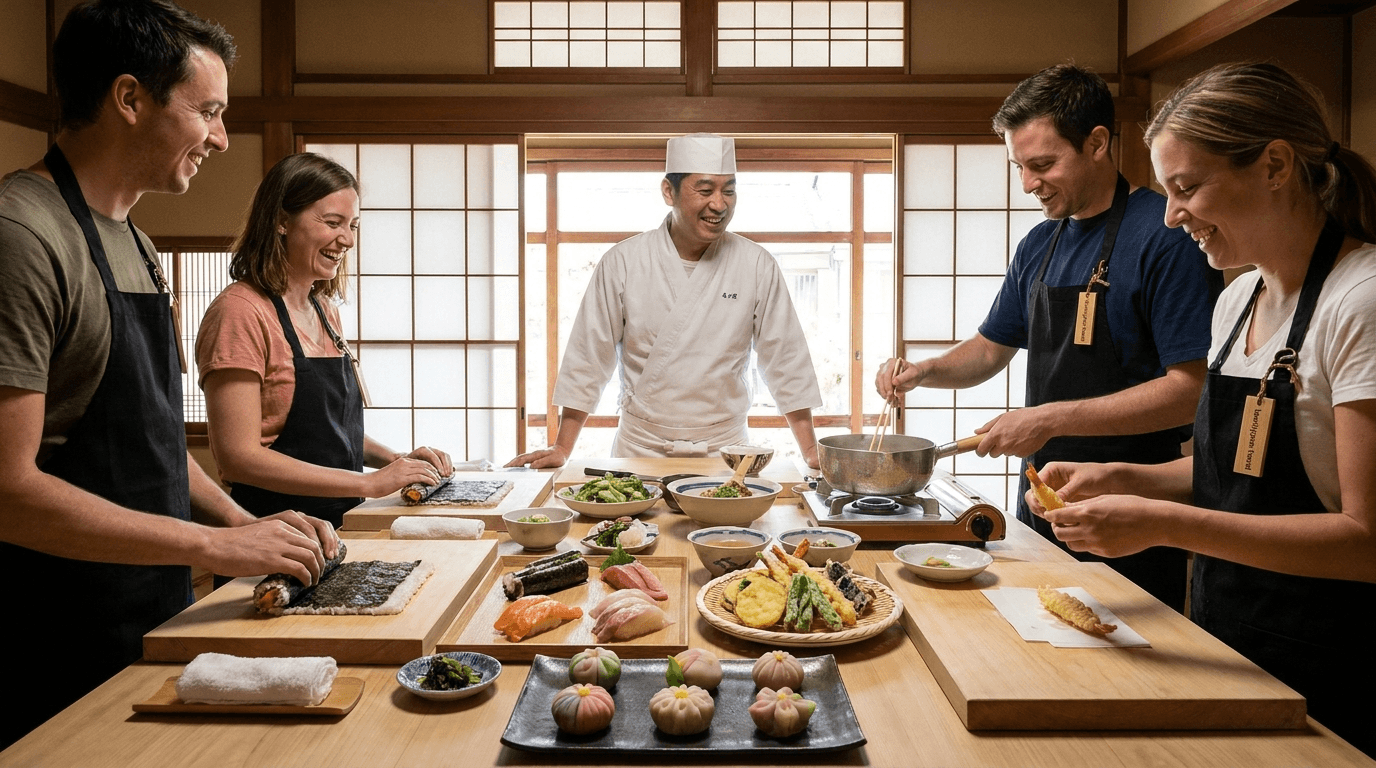
Japan Cooking Classes: Best Options by City
By Tour in Japan editors · Updated
Learn to make ramen, sushi, tempura, and more from Japanese chefs. Here's where to book.
Learn to make ramen, sushi, tempura, and more from Japanese chefs. Here's where to book.
Why Take a Cooking Class?
- Learn authentic recipes — from Japanese chefs
- Understand ingredients — Japanese cooking is precise
- Cultural immersion — food is central to Japanese culture
- Take skills home — recreate dishes forever
- Meet people — social, fun activity
Top Cooking Classes
Tokyo
| Class | Specialty | Price | Duration |
|---|---|---|---|
| Tokyo Cooking Studio | Sushi, ramen | ¥8,000–12,000 | 3–4 hours |
| Hattori Cooking School | Japanese cuisine | ¥10,000–20,000 | 3–4 hours |
| AirKitchen | Various | ¥6,000–10,000 | 2–3 hours |
| Eat Japan | Sushi, bento | ¥7,000–10,000 | 3 hours |
| Buddha Bellies | Vegan Japanese | ¥7,000–9,000 | 3 hours |
Kyoto
| Class | Specialty | Price | Duration |
|---|---|---|---|
| WAK Japan | Kaiseki, tofu | ¥8,000–15,000 | 3–4 hours |
| Kyoto Cooking Class | Traditional | ¥7,000–12,000 | 3 hours |
| Haru Cooking Class | Home cooking | ¥6,000–9,000 | 2–3 hours |
| Toyota City Cooking | Regional | ¥8,000–12,000 | 3 hours |
Osaka
| Class | Specialty | Price | Duration |
|---|---|---|---|
| Osaka Cooking Class | Takoyaki, okonomiyaki | ¥7,000–10,000 | 3 hours |
| Sakura Cook | Street food | ¥6,000–9,000 | 2–3 hours |
| Cooking Sun | Various | ¥8,000–12,000 | 3–4 hours |
Other Cities
| City | Class | Price |
|---|---|---|
| Hiroshima | Okonomiyaki class | ¥5,000–8,000 |
| Fukuoka | Ramen making | ¥6,000–9,000 |
| Sapporo | Miso ramen | ¥7,000–10,000 |
Popular Dishes to Learn
| Dish | Difficulty | What You'll Learn |
|---|---|---|
| Sushi | Medium | Rice preparation, fish cutting, rolling |
| Ramen | Medium–Hard | Noodle making, broth preparation |
| Tempura | Easy–Medium | Batter technique, frying |
| Wagashi | Medium | Japanese sweets making |
| Kaiseki | Hard | Multi-course traditional |
| Takoyaki | Easy | Octopus balls, Osaka specialty |
| Okonomiyaki | Easy | Savory pancake, Osaka specialty |
| Bento | Easy | Japanese lunch box arrangement |
What's Included
Most classes include:
- ✅ Ingredients
- ✅ Recipe book (often in English)
- ✅ Apron
- ✅ Hands-on instruction
- ✅ Eat what you make
- ✅ Sometimes: market tour, sake tasting
Tips
- Book in advance — popular classes fill up weeks ahead
- Check dietary requirements — vegetarian/vegan options available
- Wear comfortable clothes — you'll be standing and cooking
- Bring an appetite — you'll eat everything you make
- Ask about recipes — most provide take-home recipes
- Check language — ensure class is in English
- Combine with market tour — some classes include it
- Gift idea — cooking class as a present for travel companions
📱Get a Japan eSIM
Stay Connected in Japan
Yesim eSIMs work on arrival — no physical SIM needed. Japan data plans from $5.