
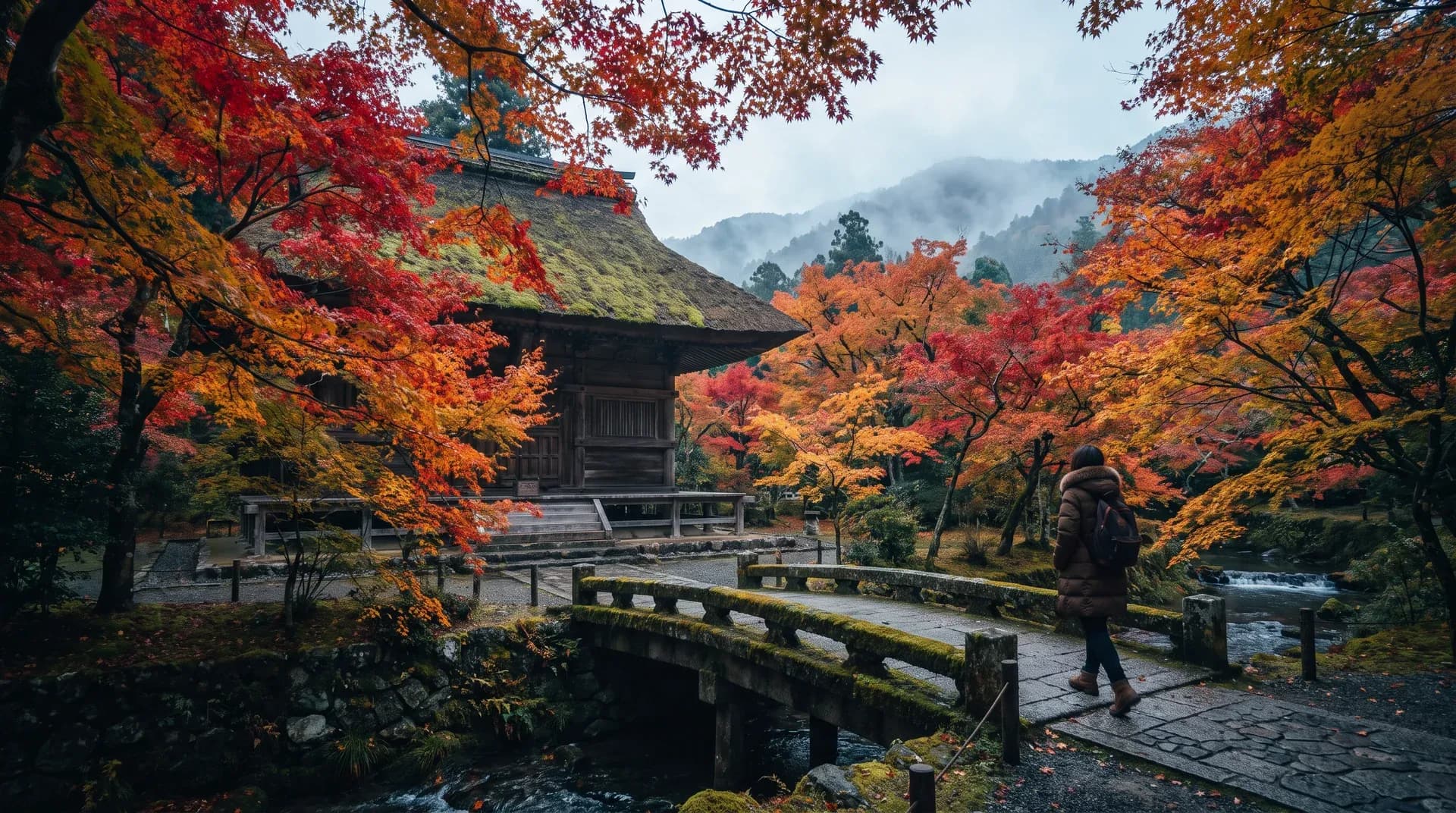
Japan Autumn Travel Guide
Plan your Japan autumn trip with peak foliage forecasts for Kyoto (mid-December), Tokyo (late November), and other key destinations. Expect daily budgets of ¥8,000-15,000 ($55-105 USD) for budget travelers, with extended daylight saving period until early December.
Affiliate link — we may earn a commission at no extra cost to you. Affiliate disclosure
The first week of November paints Kyoto's Philosopher's Path in fiery reds, but the official peak forecast for 2026 lands in mid-December according to the latest Japan Autumn Travel Guide data. This timing shift—driven by regional climate patterns, urban heat islands, and varying microclimates across different districts—affects everything from hotel availability to local train schedules. For international visitors chasing vibrant autumn colors, the viewing window closes earlier in Tokyo's inner-city parks and stretches later into the historic temple grounds nestled in the surrounding hills of Kyoto. The Japan Travel Planning Guide notes that this year's extended shoulder season runs through early December, giving you an extra two weeks compared to peak October forecasts to witness the seasonal transformation. Budget travelers should expect daily costs between ¥8,000-15,000 ($55-105 USD) depending on accommodation choices, with hostels filling six months ahead of peak foliage weeks. The Maglev construction delay at Nagoya Station—now pushed to at least 2033—means you'll still rely on the conventional Tokaido Shinkansen for Kyoto-Tokyo routes, adding roughly 15 minutes to travel times compared to initial maglev projections. This guide walks you through exact foliage timing, realistic daily budgets, and transit logistics so you can navigate Japan's autumn season without tourist-trap crowds or surprise expenses.
Essential Highlights & Local Itinerary
Day 1-3: Tokyo - Ueno Park to Shinjuku Gyoen
Start your autumn journey in Tokyo's sprawling Ueno Park, situated in the Taito district, where the 1,000+ maple and ginkgo trees create a natural gold-and-crimson tunnel along Shinobazu Pond. Take the JR Yamanote Line to Ueno Station (¥200 / ~$1.40 USD), then walk 5 minutes past the historic monuments to the park entrance. Peak foliage occurs late November to early December 2026, with the best viewing light arriving between 4-6 PM when the setting sun filters through the crimson leaves against the backdrop of ancient shrine structures. Plan for 2-3 hours here; general admission to the park grounds is free, while special exhibit areas range up to ¥600 / ~$4 USD. Opening hours vary by season, so verify locally before you go.
Continue to Shinjuku Gyoen the following morning, located in the Shinjuku district. From Ueno, ride the Tokyo Metro Hibiya Line to Shinjuku Station (¥170 / ~$1.20 USD), then exit toward the park's main gate. The historic French garden section offers particularly dramatic autumn contrast against manicured lawns, sprawling lawns, and historic greenhouses. Allocate 2 hours; entry fee is ¥500 / ~$3.50 USD. Avoid Sunday afternoons when local families picnic among the giant gingko trees and pathways become congested with weekend walkers. Opening hours vary, typically closing earlier in winter months.
Day 4-6: Nikko and Nikko-Edo Trail
Take the JR Nikko Line from Shinjuku to Tobu-Nikko (¥2,700 / ~$19 USD with regional transport passes, or ¥4,400 one-way for standard limited express tickets). The UNESCO World Heritage Toshogu Shrine complex explodes with brilliant autumn color from mid-November through early December. Start at the main hall complex featuring intricate wood carvings, then follow the Edo-era stone paths toward Futarasan Shrine. Two full days allow thorough exploration of both sites plus the surrounding Rinno-ji temple complex and sacred bridges. Daily budget here increases to ¥12,000-18,000 ($85-130 USD) including traditional ryokan stays and regional culinary specialties. Opening hours for shrine grounds vary; confirm locally.
Day 7-9: Kyoto - Arashiyama to Gion
Shinkansen from Tokyo to Kyoto takes 2 hours 20 minutes via Nozomi service (¥13,500 / ~$95 USD, not covered by JR Pass; Hikari trains cost ¥14,000 / ~$98 USD and remain fully JR Pass eligible). The Japan Autumn Travel Guide confirms Kyoto's peak foliage occurs mid-December 2026, later than many travelers traditionally expect. Begin your exploration in Arashiyama's famous Bamboo Grove, then hike the tranquil Okochi Sanso Villa path where carefully cultivated maple leaves frame expansive panoramic views over the Hozu River valley.
Cross the Kamo River into the historic Gion district for evening illumination walks along lantern-lit stone alleyways. The traditional tea house experience here costs ¥3,000-5,000 ($21-35 USD) for an authentic matcha ceremony served with seasonal Japanese sweets. Day 8 focuses on Fushimi Inari Taisha's thousands of vermilion torii gates—best visited at absolute dawn to avoid heavy tour groups and catch the first morning light filtering through the bright red structures. Opening hours for the shrine grounds vary; early morning access is generally unrestricted.
Day 10-12: Nara and Osaka
Take a day trip to Nara from Kyoto via the Kintetsu Railway (¥600 / ~$4 USD, taking approximately 40 minutes). The sprawling Todai-ji temple grounds surround Nara Park's resident free-roaming deer, whose seasonal antler-cutting events overlap with peak autumn foliage. Spend 3-4 hours exploring the massive wooden Buddha hall before heading westward to Osaka for evening dinner.
Osaka's vibrant Dotonbori canal area transforms at night with neon signs casting colorful reflections on autumn-tinted trees lining the pedestrian canal path. Take the JR Yamatoji Rapid Service from Kyoto (¥560 / ~$4 USD, 30 minutes). The area's street food—including freshly made takoyaki and savory okonomiyaki—costs ¥800-1,200 per serving ($5.50-8.50 USD). Note that half of inspected Airbnb-style rentals in Osaka were breaking local regulations in recent inspections, so book accommodations through established, verified hotel platforms and double-check municipal licensing numbers. Opening hours for food stalls vary; many operate late into the night.
Practical Details & Dual-Currency Budget
Best Season & Weather
Japan's autumn travel season officially runs September through November, with optimal weather conditions landing between mid-October and early December. Temperature ranges from 15-22°C (59-72°F) in Tokyo and 10-18°C (50-64°F) in Kyoto during peak foliage weeks. Typhoon season typically ends by late October, though occasional September storms can temporarily disrupt early autumn travel plans. The extended shoulder season through early December offers milder daytime temperatures and noticeably fewer crowds than the frantic peak cherry blossom periods in spring.
Budget Breakdown
Budget travelers should prepare ¥8,000-12,000 daily ($55-85 USD) covering hostel dorm beds (¥3,000-4,500), convenience store meals at local chains like Lawson or 7-Eleven (¥1,000-1,500), and basic local transit passes. Mid-range travelers budget ¥15,000-25,000 ($105-175 USD) for private hotel rooms, sit-down restaurant dinners, and premium rail passes. The Japan Travel Planning Guide recommends the 7-day JR Pass at ¥50,000 ($350 USD) for itineraries covering Tokyo-Kyoto-Osaka loops, saving approximately ¥10,000 ($70 USD) compared to purchasing individual Shinkansen tickets. Euro equivalents vary with exchange rates.
Transit & Access
Purchase IC cards (Suica or Pasmo) at Narita or Haneda airports for seamless tap-and-go travel across Tokyo's vast train and subway network (¥200 initial deposit plus your chosen load amount). The 3-day Tokyo Subway Ticket costs ¥1,500 ($10.50 USD) for unlimited rides, making it ideal for foliage-hopping between Ueno, Shinjuku, and surrounding urban parks. For Kyoto, the one-day municipal bus pass at ¥700 ($5 USD) covers all city buses including essential routes heading directly to Arashiyama. Download the official Japan travel navigation apps for real-time transit updates and station layout maps. Euro prices for passes vary.
Where to Eat & Local Food Secrets
Tokyo's historic Tsukiji Outer Market remains the quintessential breakfast experience for travelers, where fresh tamagoyaki (sweet rolled Japanese omelet) costs ¥500-800 ($3.50-5.50 USD) and grilled seafood rice bowls reach ¥1,500 ($10.50 USD). Arrive before 8 AM to avoid massive tour groups and secure seats at local sushi counters. In Kyoto, Nishiki Market's narrow street food stalls offer takoyaki at ¥600 per order ($4 USD) and yuba (tofu skin) delicacies and sweets at ¥800 ($5.50 USD).
Autumn brings distinct seasonal food specialties nationwide. In Nikko, sanjū-yaki—a layered pancake filled with sweet red bean paste—costs ¥1,200 ($8.50 USD) at traditional teahouses located near the railway station. Osaka's bustling Dotonbori area features kushikatsu (deep-fried meat and vegetable skewers) at ¥150-300 per individual piece ($1-2 USD), best enjoyed standing directly at the street-side counter to avoid higher tourist-pricing tableside service fees. Osaka's iconic street food scene thrives dynamically in autumn as local vendors transition away from summer cold noodle dishes toward heartier winter preparations.
Dining etiquette matters deeply: in Kyoto's traditional tea houses, silence your smartphone entirely and follow your host's lead with tea pouring gestures. At local ramen shops, say 'itadakimasu' before eating your meal and 'gochisousama' to express gratitude afterward. Tipping is completely unnecessary throughout Japan and may actually offend service staff. Cash remains vital in smaller establishments—carry ¥10,000-20,000 ($70-140 USD) daily to cover traditional markets, temple admission fees, and neighborhood izakayas. Euro amounts vary.
Essential Traveler Checklist
- Download official railway routing apps for train schedules and book Shinkansen seats 3 months ahead during peak foliage season
- Purchase the 7-day JR Pass before arrival (¥50,000 / $350 USD) for extended Tokyo-Kyoto-Osaka travel savings
- Carry ¥10,000-20,000 cash daily ($70-140 USD) as many rural temples, open-air markets, and family-run izakayas are strictly cash-only
- Pack light, adaptable clothing layers and a compact travel umbrella; Tokyo's late November weather can swing wildly from 22°C sunny mornings to 15°C chilly afternoons
- Learn basic essential Japanese phrases: 'sumimasen' (excuse me), 'arigatou gozaimasu' (thank you), and 'eigo ga hanasemasu ka?' (do you speak English?)
Frequently Asked Questions
How much does it cost to travel around Japan in autumn?
Daily budgets range from ¥8,000-12,000 ($55-85 USD) for budget travelers staying in hostels and eating convenience store meals, to ¥15,000-25,000 ($105-175 USD) for mid-range travelers enjoying private hotels and restaurant dinners. The Japan Travel Planning Guide recommends the 7-day JR Pass at ¥50,000 ($350 USD) for major city-hopping routes.
When is the best time to see autumn foliage in Kyoto?
According to the Japan Autumn Travel Guide, Kyoto's peak foliage occurs in mid-December 2026, later than many travelers expect. This timing shift means temple visits should be planned for December 10-20 for optimal color, with early morning visits avoiding crowds and capturing the best light through the vermilion torii gates at Fushimi Inari.
Is the JR Pass worth it for autumn travel?
Yes, if your itinerary covers Tokyo-Kyoto-Osaka or similar long-distance routes. Individual Shinkansen tickets between these cities cost ¥13,500-14,000 each way, making the 7-day JR Pass at ¥50,000 ($350 USD) cost-effective for travelers making two or more long-distance journeys within the pass period.
Should I visit Japan during Golden Week or autumn for foliage?
Autumn offers superior foliage viewing with comfortable temperatures and fewer crowds than Spring's Golden Week. Summer's typhoon season and Spring's massive domestic travel rush make autumn the preferred season for international visitors seeking autumn colors without extreme weather or accommodation shortages.
What's the impact of the Nagoya Maglev delay on travel planning?
The delayed Chuo Shinkansen maglev won't be operational until at least 2033, meaning travelers between Tokyo and Osaka must continue using the conventional Tokaido Shinkansen, adding approximately 15 minutes to journey times compared to initial maglev projections. This delay actually benefits current travelers through lower ticket prices and established service reliability.
Related reading
- [Japan Autumn Travel Guide: Foliage and Silver Week Logistics](/blog/japan-autumn-travel-foliage-silver-week)
- [Tokyo Autumn Travel Guide: Foliage Dates, Costs & Logistics](/blog/tokyo-autumn-travel-guide-foliage-costs-logistics)
- [Tokyo Autumn Festivals Itinerary: Halloween, Food, Godzilla ](/blog/tokyo-autumn-festivals-itinerary)
- [Japan Autumn Travel Guide: Foliage Forecasts and Snacks](/blog/japan-autumn-travel-guide-foliage-snacks)
- [Japan Travel Planning Guide: Costs, Transit, and Autumn Itin](/blog/japan-travel-planning-guide-costs-transit-autumn)
Sources
- Azerbaijan welcoming 'set-jetting' fans of Japan TV drama 'Vivant'
- Maglev construction at Nagoya Station won't be completed until at least 2033
- Japan's Autumn Foliage Forecast 2026: Peak Times for Red and Yellow Leaves
- Half of Inspected Airbnb-Style Rentals in Osaka Were Breaking the Rules
Frequently Asked Questions
What is Japan autumn travel guide?
Plan your Japan autumn trip with peak foliage forecasts for Kyoto (mid-December), Tokyo (late November), and other key destinations. Expect daily budgets of ¥8,000-15,000 ($55-105 USD) for budget travelers, with extended daylight saving period until early December. Check JR Pass eligibility for Shinkansen access before booking.
Who is Japan autumn travel guide best for?
It suits readers who want a practical, step-by-step path to the outcome described above rather than abstract theory. If you are starting from zero, follow the numbered steps in order and treat the caveats section as a checklist.
How long does Japan autumn travel guide take to work?
Timelines vary with execution, but the workflow in this guide is designed to produce a first measurable result within the timeframes stated in each step. Set expectations from the caveats section, not from hype.
Ready to explore Japan?
Browse tours and activities, or tell us what you're looking for and we'll suggest the best options.
Stay Connected in Japan
Airalo eSIMs work on arrival — no physical SIM needed. Data plans from $5 for 7 days.
Travel Insurance for Japan
Medical, trip cancellation, and adventure sports covered. Plans from $1.5/day.