
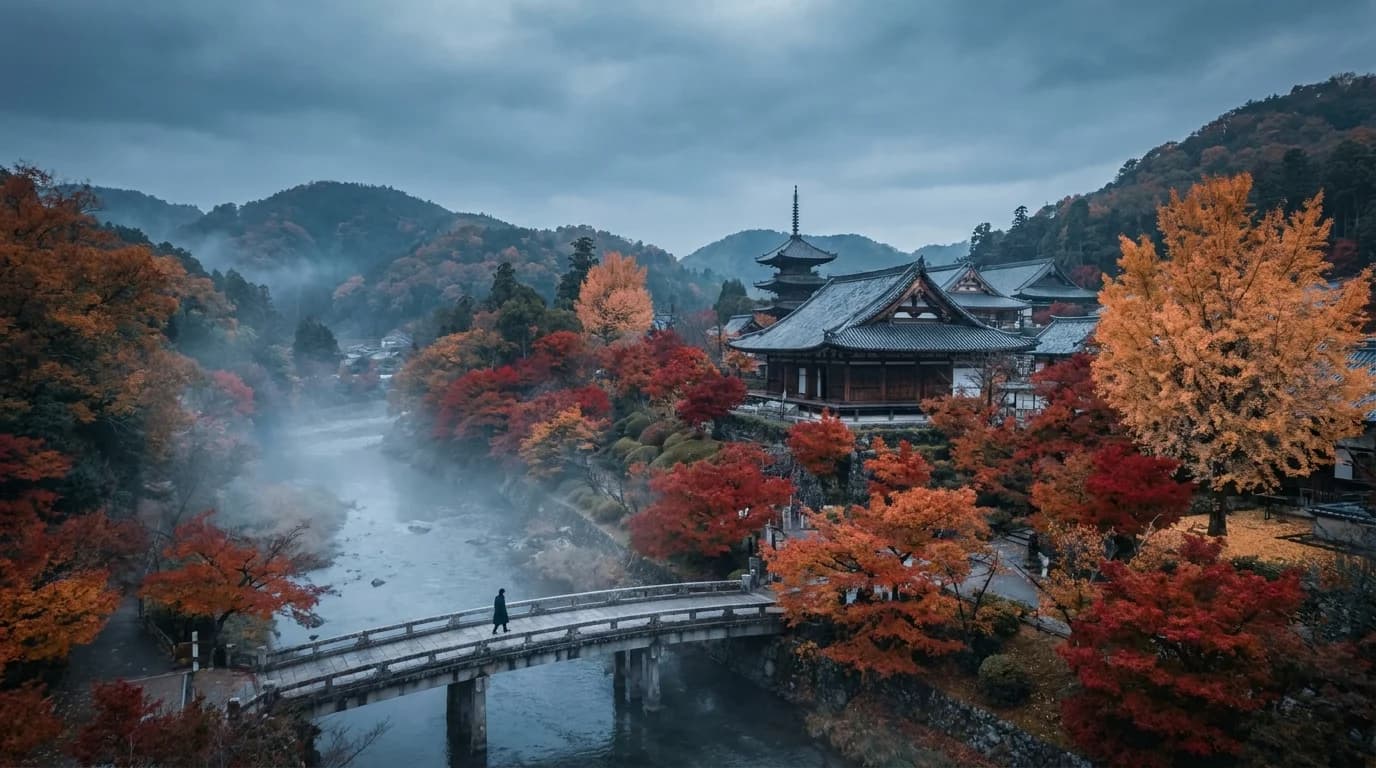
Best Autumn Leaves Japan
By Tour in Japan editors · Updated
Experience Japan's spectacular autumn foliage. Discover the best viewing spots and timing for fall colors.
Best Autumn Leaves in Japan: 20 Spectacular Koyo Spots (2026 Guide)
Japan's autumn foliage (紅葉 koyo) transforms temples, mountains, and gardens into fiery tapestries of red, orange, and gold from September through December.
Why Japan's Autumn Leaves Are World-Famous
Japan's autumn foliage season (koyo) is as celebrated as cherry blossom season. The combination of Japan's diverse maple species (momiji), dramatic mountain landscapes, and ancient temple gardens creates some of the world's most spectacular fall color displays.
Autumn Leaves vs Cherry Blossoms
| Factor | Cherry Blossoms (Sakura) | Autumn Leaves (Koyo) |
|---|---|---|
| Duration | 1–2 weeks peak | 4–6 weeks |
| Colors | Pink/white | Red, orange, yellow, gold |
| Coverage | Entire country | Starts north, moves south |
| Weather | Often rainy | Usually clear, cool |
| Photography | Easier (bright daylight) | More dramatic (golden hour) |
| Crowds | Very crowded | Less crowded |
Koyo Forecast: When and Where
North to South Progression
| Region | Peak Time | Best Spots |
|---|---|---|
| Hokkaido | Mid-September–Early October | Daisetsuzan, Jozankei |
| Tohoku | Late October–Early November | Nikko, Tsuruoka |
| Kanto | Late October–Late November | Nikko, Hakone |
| Chubu | Mid-October–Late November | Takayama, Kamikochi |
| Kansai | Late October–Early December | Kyoto, Nara |
| Chugoku | Early–Mid November | Miyajima |
| Kyushu | Mid November–Early December | Kurokawa Onsen |
Top 20 Koyo Spots in Japan
Tier 1: Must-Visit
1. Nikko (Tochigi) — Most Accessible from Tokyo
- Peak: Late October–Early November
- Highlights: Toshogu Shrine, Kegon Falls, Lake Chuzenji
- Access: 2 hours from Tokyo (train)
- Tip: Weekday mornings are least crowded
2. Kyoto — Most Photogenic
- Peak: Mid November–Early December
- Highlights: Tofukuji, Eikando, Kiyomizudera
- Access: From Tokyo (2.5 hrs shinkansen)
- Tip: Tofukuji at 8:30 AM opening is magical
3. Takayama (Gifu) — Best Mountain Colors
- Peak: Late October–Mid November
- Highlights: Old town, Hida folk village
- Access: 4 hours from Tokyo (train + bus)
- Tip: Combine with Shirakawago village
4. Kamikochi (Nagano) — Best Alpine Scenery
- Peak: Mid October–Early November
- Highlights: Kappa Bridge, Hotaka peaks
- Access: 5 hours from Tokyo (train + bus)
- Tip: Closed in winter (Nov–Apr)
5. Hakone (Kanagawa) — Best Views of Fuji
- Peak: Late October–Late November
- Highlights: Lake Ashi, Owakudani, museums
- Access: 1.5 hours from Tokyo
- Tip: Hakone Free Pass covers all transport
Tier 2: Excellent
6. Tsuruoka (Yamagata)
- Peak: Late October–Early November
- Highlights: Dewa Sanzan mountains
- Access: 3.5 hours from Tokyo
- Tip: Less crowded than Nikko
7. Kakunodate (Akita)
- Peak: Late October–Early November
- Highlights: Samurai district with weeping maples
- Access: 3 hours from Tokyo (shinkansen)
- Tip: Walking tour of samurai houses
8. Yamadera (Yamagata)
- Peak: Late October–Early November
- Highlights: 1,000-step temple climb
- Access: 3 hours from Tokyo
- Tip: Go early morning for photos
9. Daisetsuzan (Hokkaido)
- Peak: Mid September–Early October
- Highlights: Japan's earliest autumn colors
- Access: 2 hours from Sapporo
- Tip: Ropeway for panoramic views
10. Jozankei (Hokkaido)
- Peak: Early–Mid October
- Highlights: Hot springs + fall colors
- Access: 1 hour from Sapporo
- Tip: Combined with onsen stay
Tier 3: Hidden Gems
11. Chusonji (Iwate)
- Peak: Late October–Early November
- Highlights: Golden Hall among red maples
- Access: 4 hours from Tokyo
- Tip: Hiraizumi area has multiple temples
12. Nikko Senjogahara
- Peak: Mid October
- Highlights: Marshland hiking with colors
- Access: Part of Nikko area
- Tip: Walking trail (3 hours)
13. Eiheiji (Fukui)
- Peak: Early November
- Highlights: Zen monastery in forest
- Access: 3 hours from Tokyo
- Tip: Overnight stay available (temple lodging)
14. Mount Koya (Wakayama)
- Peak: Early–Mid November
- Highlights: Sacred mountain temples
- Access: 3 hours from Osaka
- Tip: Stay in temple lodging (shukubo)
15. Tofukuji (Kyoto)
- Peak: Mid November
- Highlights: 2,000 maples, Tsutenkyo Bridge
- Access: 15 min from Kyoto Station
- Tip: Arrive at 8:30 AM opening
16. Eikando (Kyoto)
- Peak: Mid November
- Highlights: Zen temple with pond reflection
- Access: Near Philosopher's Path
- Tip: Night illumination available
17. Daigoji (Kyoto)
- Peak: Mid–Late November
- Highlights: Massive temple complex
- Access: 20 min from Kyoto Station
- Tip: Less crowded than Tofukuji
18. Kokedera (Kyoto)
- Peak: Mid November
- Highlights: Moss garden with maples
- Access: Western Kyoto
- Tip: Limited entry (reservation required)
19. Miyajima (Hiroshima)
- Peak: Early–Mid November
- Highlights: Floating torii gate with colors
- Access: 1.5 hours from Hiroshima
- Tip: Stay overnight for morning views
20. Mount Yoshino (Nara)
- Peak: Mid November (autumn colors)
- Highlights: 30,000 trees (also famous for cherry blossoms)
- Access: 2 hours from Osaka
- Tip: Upper areas have best colors
Photography Guide
Best Times for Photography
| Time | Lighting | Best For |
|---|---|---|
| 6:00–8:00 AM | Golden hour, misty | Landscape, reflections |
| 10:00–14:00 | Bright, high contrast | Details, close-ups |
| 15:00–17:00 | Warm, directional | Textures, shadows |
| 17:00–18:00 | Golden hour | Best overall lighting |
Composition Tips
- Include water — reflections double the beauty
- Use leading lines — paths, bridges, rivers
- Frame with architecture — temples, pagodas
- Shoot up — canopy shots create patterns
- Include people — adds scale and story
Camera Settings
| Setting | Recommendation |
|---|---|
| Aperture | f/8–f/16 for landscape |
| ISO | 100–400 |
| White balance | Daylight or shade |
| Polarizing filter | Reduces glare, enhances color |
Packing for Autumn Leaves
| Item | Why |
|---|---|
| Layers | Temperature varies (5–20°C) |
| Comfortable shoes | Lots of walking |
| Rain jacket | Autumn showers possible |
| Camera + tripod | Essential for photography |
| Binoculars | For distant views |
| Picnic blanket | For hanami-style viewing |
| Thermos | Hot tea for cold mornings |
Budget Breakdown
1-Week Koyo Trip (per person)
| Category | Budget | Mid-Range | Luxury |
|---|---|---|---|
| Transport | ¥20,000 | ¥40,000 | ¥80,000 |
| Accommodation | ¥35,000 | ¥70,000 | ¥150,000 |
| Food | ¥21,000 | ¥42,000 | ¥70,000 |
| Activities | ¥5,000 | ¥15,000 | ¥30,000 |
| Total | ¥81,000 | ¥167,000 | ¥330,000 |
7-Day Koyo Itinerary
Day 1–2: Tokyo → Nikko
- Day 1: Travel to Nikko, Toshogu Shrine
- Day 2: Kegon Falls, Lake Chuzenji, Senjogahara hike
Day 3–4: Takayama & Shirakawago
- Day 3: Travel to Takayama, old town exploration
- Day 4: Shirakawago village, farmhouse stay
Day 5–7: Kyoto
- Day 5: Tofukuji, Philosopher's Path
- Day 6: Eikando, Kiyomizudera
- Day 7: Arashiyama bamboo grove + garden
Frequently Asked Questions
Q: When is the best time for autumn leaves? A: Depends on region: Hokkaido (Sept), Tokyo/Kyoto (Nov), Kyushu (late Nov–Dec). Check the koyo forecast each year.
Q: Is it worth visiting during autumn leaves? A: Absolutely! Many Japanese consider koyo season even better than cherry blossoms — longer duration, fewer crowds, and more dramatic colors.
Q: Can I see autumn leaves and cherry blossoms in the same trip? A: Not in the same season. Cherry blossoms are March–April, autumn leaves are October–December.
Q: Do I need to book accommodation in advance? A: Yes, especially in Kyoto and popular onsen towns. Book 1–2 months ahead.
Q: What's the weather like during autumn leaves? A: Usually cool and clear (10–20°C). Perfect for outdoor activities. Rain is possible but less frequent than spring.
Essential Japanese Phrases
| English | Japanese | Pronunciation |
|---|---|---|
| Autumn leaves | 紅葉 | Koyo |
| Beautiful colors | 素敵な色 | Suteki na iro |
| Red leaves | 赤い葉 | Akai ha |
| Falling leaves | 落ち葉 | Ochiba |
| Mountain | 山 | Yama |
| Temple | 寺 | Tera |
| Photography | 写真 | Shashin |
Japan's autumn foliage season offers a stunning natural spectacle that rivals any in the world. From the ancient temples of Kyoto to the alpine peaks of Kamikochi, every corner of Japan transforms into a canvas of red, orange, and gold.
Stay Connected in Japan
Yesim eSIMs work on arrival — no physical SIM needed. Japan data plans from $5.