
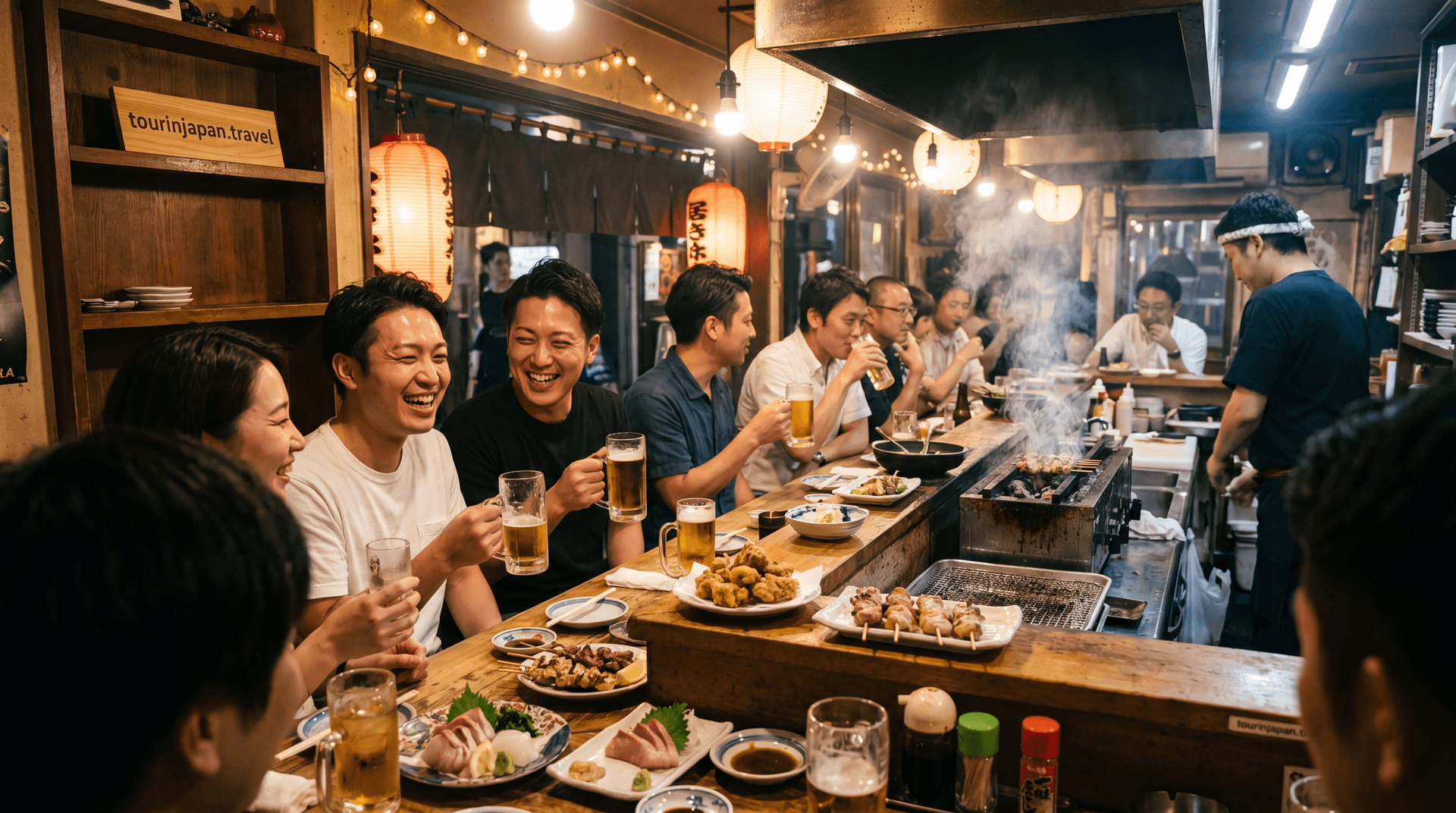
Izakaya food and drink: what to order at a Japanese pub
A guide to izakaya dining in Japan: shared plates such as edamame, karaage, yakitori and gyoza, plus drinks, all-you-can-drink plans and etiquette.
Affiliate link — we may earn a commission at no extra cost to you. Affiliate disclosure
An izakaya is Japan's version of a pub or tavern — a casual, inexpensive drinking establishment, similar to an Irish pub or a tapas bar, where food is as important as drink. Food at an izakaya is meant to be shared: you order a variety of dishes, and when they arrive each guest is given a torizara, a small plate used to take the portion you want from the main plate (Izakaya Dining Guide). Knowing what to order makes your first izakaya experience significantly better.
The Must-Order Izakaya Starters
Edamame — boiled salted soybeans in the pod — is one of the dishes available at most izakaya, and it pairs well with beer and sake. Karaage (Japanese fried chicken), yakitori, tofu and grilled fish are the other typical offerings. A small dish included in the per-person cover charge that some places levy may be brought to you before you have ordered anything (Entertainment and Nightlife in Japan).
At some restaurants, especially izakaya, that automatically served appetiser is not complimentary and is treated as a table charge. It is usually made clear on menus and signs, and if you are unsure you can ask the waitstaff (Japanese Customs and Etiquette).
Grilled Items and Heavier Plates
Yakitori is chicken and vegetables cut into one-bite pieces, skewered and charcoal-grilled, and seasoned either with salt or with tare, a sweetened soy-sauce base. Innards usually taste better with tare. Order by cut rather than just "yakitori": gizzard, tsukune (meatballs), chicken skin, cartilage, liver and negima (chicken breast meat and green onion) are all common. A skewer usually costs around ¥150 (2019); check the current price on the menu before you order (A Thorough Introduction to Yakitori).
Gyoza are another izakaya staple. Izakaya serve a huge variety of small, tapas-style dishes to accompany drinks, from yakitori to edamame, gyoza, karaage and fried or fresh tofu. Menus are often illustrated with photographs of the dishes, and many places now use touch-panel ordering systems (Local Street Food Favorites & Budget restaurant in Japan).
If you want to try gyoza outside an izakaya, Gyoza no Ohsho is a nationwide chain of gyoza restaurants with branches across Japan (store information).
Izakaya Dishes to Try
- Edamame: salted boiled soybeans in the pod — the classic izakaya starter
- Karaage: Japanese fried chicken
- Yakitori: grilled chicken skewers — try negima, tsukune and chicken skin
- Gyoza: pan-fried dumplings
- Tofu: served fresh or fried
- Grilled fish
- Sashimi platter: assorted raw fish
- Nabe: a one-pot hot pot cooked at the table and served from the pot, common in the colder months
- Yakisoba noodles
- French fries and chicken wings: Western dishes you will also find at many izakaya
- Takoyaki: octopus balls, which originated in Osaka and are now a nationwide street-food favourite
Sources for the list: Izakaya Dining Guide, Entertainment and Nightlife in Japan and Local Street Food Favorites & Budget restaurant in Japan.
Drinks and All-You-Can-Drink Plans
The drink menu matters as much as the food menu. Standard beer and spirits are available, plus Japanese classics such as sake (served hot and cold), umeshu (plum wine) and shochu. Many izakaya offer nomihodai, all-you-can-drink plans, which typically last for a set amount of time — usually one to two hours — and let you drink as much as you want from a designated section of the menu. On busy nights some izakaya also impose a two-hour limit on all customers, after which you may be asked to vacate your table (Entertainment and Nightlife in Japan).
Chu-hi, short for shochu highball, is a mix of shochu — a distilled liquor made from potato, wheat or rice — soda water and a fruit sweetener such as lemon, lime or grape. If you prefer soft drinks, melon soda and oolong tea are common (Izakaya Dining Guide).
Paying and Etiquette
Many izakaya have table service, and some have table buzzers to press for assistance; if not, call out "sumimasen" to attract your server's attention. When you are ready to pay, take your bill to the cash register. Japan is still a largely cash-based society and smaller establishments may not accept card payments, so it is worth carrying some cash. Tipping is not customary (Entertainment and Nightlife in Japan).
A small towel called an oshibori is often provided at restaurants to wipe your hands before eating; fold it and place it to the side afterwards. If you make a reservation, arrive on time or cancel well in advance, as smaller restaurants buy and prepare ingredients fresh based on reservations (Japanese Customs and Etiquette).
Where to Find an Izakaya
Izakaya can be found near any major train station in Japan. The chain Watami can be found throughout Japan and has a picture menu for easy ordering. Uoya Icho is a chain from Hokkaido specialising in fish and other Hokkaido foods. In Kyoto, Waraiya serves charcoal-grilled chicken, and in Osaka, Ishin is in the Tenma neighbourhood (Izakaya Dining Guide).
Ready to explore Japan?
Browse tours and activities, or tell us what you're looking for and we'll suggest the best options.
Stay Connected in Japan
Airalo eSIMs work on arrival — no physical SIM needed. Data plans from $5 for 7 days.
Travel Insurance for Japan
Medical, trip cancellation, and adventure sports covered. Plans from $1.5/day.