
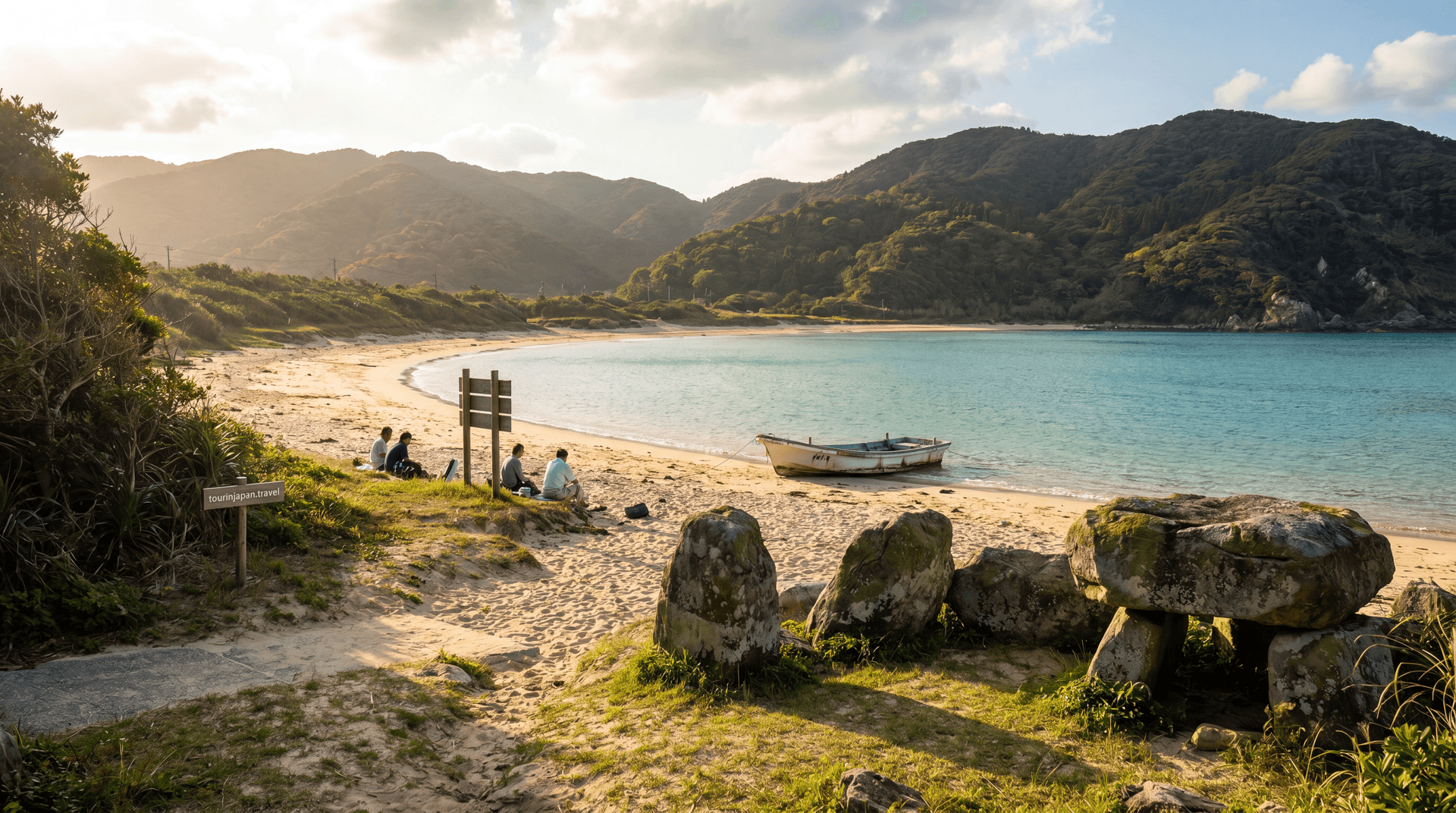
Iki Island: Kyushu's Undiscovered Beaches and Megaliths
By Tour in Japan editors · Updated
Iki Island near Kyushu hides pristine beaches, ancient megalithic tombs, and a laid-back island pace that Japanese vacationers have kept secret from most international travelers.
Iki Island floats in the Genkai Sea between Kyushu and the Korean Peninsula, a position that made it the front line of two Mongol invasions in the 13th century and, before that, one of Japan's most important trading hubs with continental Asia. The Iki Island appeal in the 21st century is simpler: beaches that rival Okinawa in clarity but sit a mere 65 kilometers from Fukuoka, making it Japan's most accessible tropical-feeling escape. The island is only 17 kilometers across but packs in over 150 megalithic stone tombs (the densest concentration in Japan), a sake brewery using the island's exceptionally pure water, and a fishing culture so strong that Iki is called the birthplace of Japanese horse mackerel cuisine. Most visitors are Japanese families and couples—international visitors remain a rarity, which is part of the attraction.
Beaches: Tsutsuki, Katsumoto, and Nagihama
Tsutsuki Beach on the island's northwest coast consistently ranks among Kyushu's finest, with white-pink sand and water transparent to the seabed in 4-5 meters. Facilities are minimal, which keeps the beach uncrowded even on summer weekends. The water is calmer than Okinawa and warmer than mainland beaches from June through October. Nagihama Beach near Ashibe on the east coast faces Kyushu and catches dramatic sunsets, with a longer shoreline and more facilities than Tsutsuki.
Katsumoto on the north coast offers good snorkeling on the rocky reef at its east end, where sea bream, octopus, and lobster can be spotted on even brief dives. The Katsumoto port area retains a working fishing harbor atmosphere with morning markets where crews sell directly from boats.
Ancient History: Harunotsuji Ruins and Megalithic Tombs
Harunotsuji Ruins are the remains of a second-century BCE market town, a Chinese-era trading port that was one of the earliest urban settlements in Japan. The excavation site includes a reconstructed building and a small museum displaying Chinese bronze mirrors and imported goods that reveal how cosmopolitan this small island once was. Entry is free. The island's 160-plus kofun burial mounds date from the 4th-7th centuries and dot rice paddy edges, forest clearings, and hilltops across Iki. The most impressive is Saiku-zuka near Ashibe, a keyhole-shaped mound in remarkably good condition.
Sake, Seafood, and Getting to Iki
Iki has four sake breweries, a remarkable number for such a small island, and the local variety uses Iki's soft underground spring water to produce a style that is slightly sweeter than mainland sake. The Yamafuku brewery in Gonoura offers tastings and tours on weekdays. Horse mackerel caught in Iki waters is the island's most prized ingredient. Aji tataki, chopped mackerel with ginger and spring onion, appears on every izakaya menu for 600-900 yen and tastes noticeably sweeter than mainland versions. Iki also produces barley shochu with a protected geographical indication, the only shochu style outside Kyushu to hold such recognition.
- Getting there: 65-min high-speed ferry from Hakata (Fukuoka) at 2,830 yen, or 2.5-hour regular ferry at 1,780 yen
- Getting around: rent a scooter at Gonoura port (3,000 yen/day) or car (4,500 yen/day)
- Best season: June-September for swimming; spring and autumn for cycling and history
- Mongol invasion memorial at Yuyake-no-hama: marks the 1274 landing that began the failed invasion of Japan
- Cycling map: available at Iki Tourism Association; covers all major tombs plus beach routes
- Accommodation: minshuku guesthouses from 8,000 yen/night with two meals included
- Day trip from Fukuoka: feasible in summer, but an overnight stay allows early morning beach time
Iki is best for travelers who want beaches without Okinawa's distance and crowds, combined with genuine historical depth. The island receives almost no coverage in international travel guides, meaning the experience of discovering it feels personal and unhurried in a way few Japanese destinations still offer.
Stay Connected in Japan
Yesim eSIMs work on arrival — no physical SIM needed. Japan data plans from $5.