
Hokkaido Food Guide: Crab, Miso Ramen, Dairy, and Soup Curry
By Tour in Japan editors · Updated
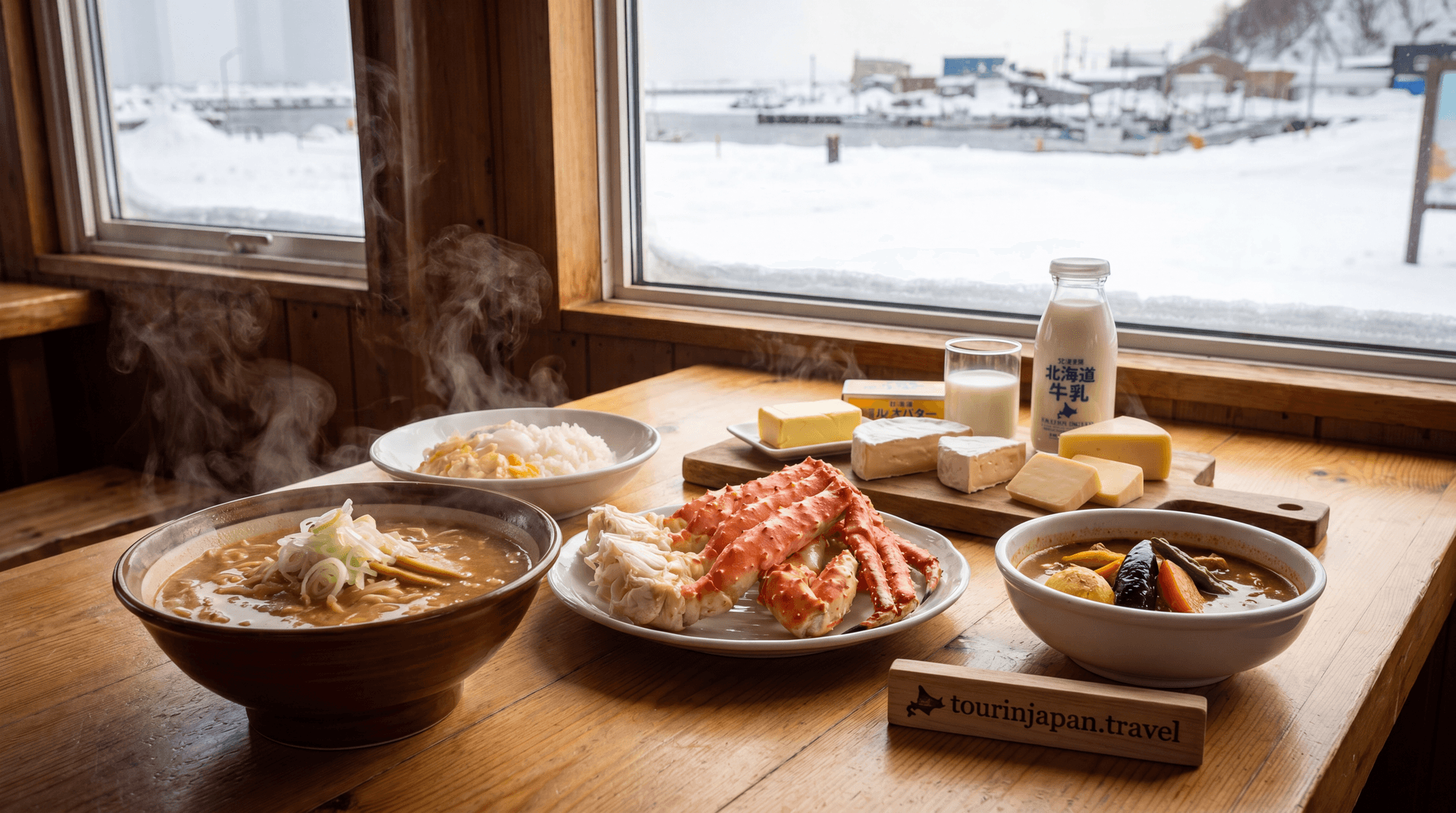
Hokkaido (北海道) is Japan's food paradise. The northern island's cold waters produce the country's best seafood, while its vast farmland creates exceptional dairy, produce, and meats. From slurping miso ramen in Sapporo to cracking king crab legs by the harbor, Hokkaido is a pilgrimage for food lovers.
Why Hokkaido Food is Different
| Factor | Impact |
|---|---|
| Cold waters | Sweeter, fattier seafood |
| Large farms | Abundant dairy, produce, meats |
| Low population | Less industrial farming, more artisanal |
| Fresh traditions | Markets, seasonal eating, minimal processing |
| Regional pride | Each area has signature dishes |
Essential Hokkaido Foods
1. Seafood (海鮮 / Kaisen)
Crab (カニ / Kani)
Hokkaido produces Japan's finest crab:
| Type | Japanese | Season | Price | Taste |
|---|---|---|---|---|
| King Crab (タラバガニ) | Taraba-gani | Winter (Nov–Mar) | ¥3,000–¥8,000 | Sweet, flaky |
| Snow Crab (ズワイガニ) | Zuwaigani | Winter (Nov–Mar) | ¥2,000–¥5,000 | Delicate, sweet |
| Hairy Crab (毛ガニ) | Kegani | Winter (Nov–Mar) | ¥2,000–¥4,000 | Rich, creamy |
| Stone Crab ( ゼガニ) | Zegani | Summer | ¥1,000–¥3,000 | Firm, mild |
Where to eat crab:
- Crab Kani Doraku (かに道楽) — Chain with live crab displays, ¥3,000–¥6,000
- Ekiben (駅弁) — Train station bento with crab, ¥2,000–¥4,000
- Jingisukan (ジンギスカン) — BBQ lamb with crab side, ¥2,000–¥4,000
Uni (ウニ / Sea Urchin)
Hokkaido uni is the world's best:
| Area | Uni Type | Season | Price |
|---|---|---|---|
| Rebun Island | Murasaki uni | Summer | ¥2,000–¥4,000 |
| Rishiri Island | Bafun uni | Summer | ¥2,000–¥4,000 |
| Akkesi | Grade A uni | Year-round | ¥3,000–¥6,000 |
How to eat: Fresh uni on rice (uni don), in sushi, or straight from the shell
Salmon (鮭 / Sake)
Hokkaido is Japan's salmon capital:
| Preparation | Description | Where |
|---|---|---|
| Ikura (イクラ) | Salmon roe, glistening orbs | Markets, sushi |
| Sake (鮭) | Fresh salmon, grilled or raw | Restaurants |
| Sake-zushi (鮭寿司) | Salmon pressed sushi | Sapporo |
2. Ramen (ラーメン)
Hokkaido has Japan's most distinctive ramen styles:
Miso Ramen (味噌ラーメン)
Sapporo's signature dish
| Feature | Details |
|---|---|
| Broth | Rich miso paste with pork and chicken |
| Noodles | Thick, curly, chewy |
| Toppings | Butter, corn, ground pork, bean sprouts |
| Best shops | Sumire, Ramen Shingen, Ebi Soba Ichigen |
| Price | ¥800–¥1,200 |
What makes it special: The fermented miso adds incredible depth. Sapporo's cold winters make this hearty bowl perfect comfort food.
Sapporo Butter Corn Ramen
A Hokkaido twist — miso ramen with butter pat and sweet corn on top. The butter melts into the broth, creating a rich, creamy experience.
Asahikawa Shoyu Ramen
Asahikawa's signature
| Feature | Details |
|---|---|
| Broth | Double soup: pork bone + seafood |
| Noodles | Medium, wavy |
| Toppings | Char siu, menma, negi |
| Best shops | Ramen Shingen, Hashimoto |
| Price | ¥800–¥1,100 |
3. Soup Curry (スープカレー)
A Hokkaido invention — thin, spiced broth with chicken and vegetables:
| Feature | Details |
|---|---|
| Origin | Sapporo, 1970s |
| Broth | Thin, spicy, aromatic |
| Meat | Usually chicken leg |
| Vegetables | Potato, carrot, eggplant, peppers |
| Rice | Served separately for dipping |
| Price | ¥1,000–¥1,800 |
Best soup curry shops:
- Suage+ (スアゲプラス) — Original soup curry, Sapporo
- Garaku (ガラク) — Rich, complex flavors
- Ouke no Kitchen (王将のキッチン) — Budget-friendly
4. Jingisukan (ジンギスカン / Genghis Khan BBQ)
Hokkaido's signature grilled lamb:
| Feature | Details |
|---|---|
| Meat | Lamb and mutton (rare in Japan) |
| Cooking | Grilled on dome-shaped grill |
| Sauce | Tare (sweet) or salt |
| Sides | Bean sprouts, cabbage, onions |
| Price | ¥2,000–¥4,000 |
Best places: Daruma (Sapporo), Sapporo Beer Garden, Sapporo Beer Museum
5. Dairy Products (乳製品)
Hokkaido produces 50% of Japan's milk:
| Product | Description | Where to Try |
|---|---|---|
| Soft serve (ソフトクリーム) | Creamiest in Japan | Everywhere |
| Butter (バター) | Rich, golden | Supermarkets |
| Cheese (チーズ) | Artisan varieties | Farm shops |
| Yogurt (ヨーグルト) | Thick, creamy | Supermarkets |
| Ice cream | Premium flavors | Farm shops |
Best soft serve: Rokkatei, Royce' Chocolate World, Furano Cheese Factory
Best Restaurants by City
Sapporo
| Restaurant | Type | Specialty | Price |
|---|---|---|---|
| Sumire (すみれ) | Ramen | Miso ramen | ¥900 |
| Ebi Soba Ichigen | Ramen | Shrimp broth | ¥900 |
| Suage+ | Soup curry | Original recipe | ¥1,200 |
| Daruma | Jingisukan | Lamb BBQ | ¥2,500 |
| Nijo Market | Market | Fresh seafood | ¥2,000 |
| Sapporo Beer Garden | Restaurant | Beer + lamb | ¥3,000 |
Hakodate
| Restaurant | Type | Specialty | Price |
|---|---|---|---|
| Morning Market (朝市) | Market | Fresh squid, uni | ¥1,500 |
| Lucky Pierrot | Fast food | Chicken burger | ¥500 |
| Ajisai (味彩) | Ramen | Salt ramen | ¥800 |
| Tachiguisoba | Noodles | Standing soba | ¥300 |
Furano/Biei
| Restaurant | Type | Specialty | Price |
|---|---|---|---|
| Furano Cheese Factory | Factory | Cheese, soft serve | ¥500 |
| Shikisai-no-Oka | Farm | Fresh dairy | ¥1,000 |
| Farm Tomita | Farm | Lavender ice cream | ¥500 |
Seasonal Food Calendar
| Season | Best Foods |
|---|---|
| Spring (Apr–May) | Squid, new vegetables, lavender desserts |
| Summer (Jun–Aug) | Uni, corn, melon, lavender |
| Autumn (Sep–Nov) | Salmon, crab (early season), pumpkin |
| Winter (Dec–Mar) | King crab, snow crab, hairy crab, hot ramen |
Budget Guide
| Category | Budget | Mid-range | Luxury |
|---|---|---|---|
| Seafood | ¥1,500 (market) | ¥4,000 (restaurant) | ¥10,000 (omakase) |
| Ramen | ¥800 | ¥1,000 | ¥1,500 |
| Soup curry | ¥1,000 | ¥1,500 | ¥2,000 |
| Jingisukan | ¥2,000 | ¥3,000 | ¥5,000 |
| Dairy/soft serve | ¥300 | ¥500 | ¥1,000 |
Tips for First-Timers
- Visit Nijo Market — Sapporo's best seafood market
- Try morning markets — Hakodate's morning market is legendary
- Eat miso ramen — it's the reason you came to Hokkaido
- Crack your own crab — restaurants often let you pick live crab
- Try soft serve everywhere — Hokkaido's dairy is unmatched
- Visit a farm — Furano Cheese Factory, Farm Tomita
- Drink local beer — Sapporo Beer is the island's pride
- Try soup curry — it's Hokkaido's unique invention
Japanese Phrases
| Japanese | Pronunciation | Meaning |
|---|---|---|
| カニ食べたいです | Kani tabetai desu | "I want to eat crab" |
| ウニはありますか? | Uni wa arimasu ka? | "Do you have sea urchin?" |
| 味噌ラーメンお願いします | Miso rāmen onegai shimasu | "Miso ramen, please" |
| おすすめは何ですか? | Osusume wa nan desu ka? | "What do you recommend?" |
| いくらですか? | Ikura desu ka? | "How much is it?" |
| ごちそうさまでした | Gochisōsama deshita | "Thank you for the meal" |
Related Articles
Stay Connected in Japan
Yesim eSIMs work on arrival — no physical SIM needed. Japan data plans from $5.