
Hiroshima Food Guide: Oysters, Okonomiyaki, and Local Specialties
By Tour in Japan editors · Updated
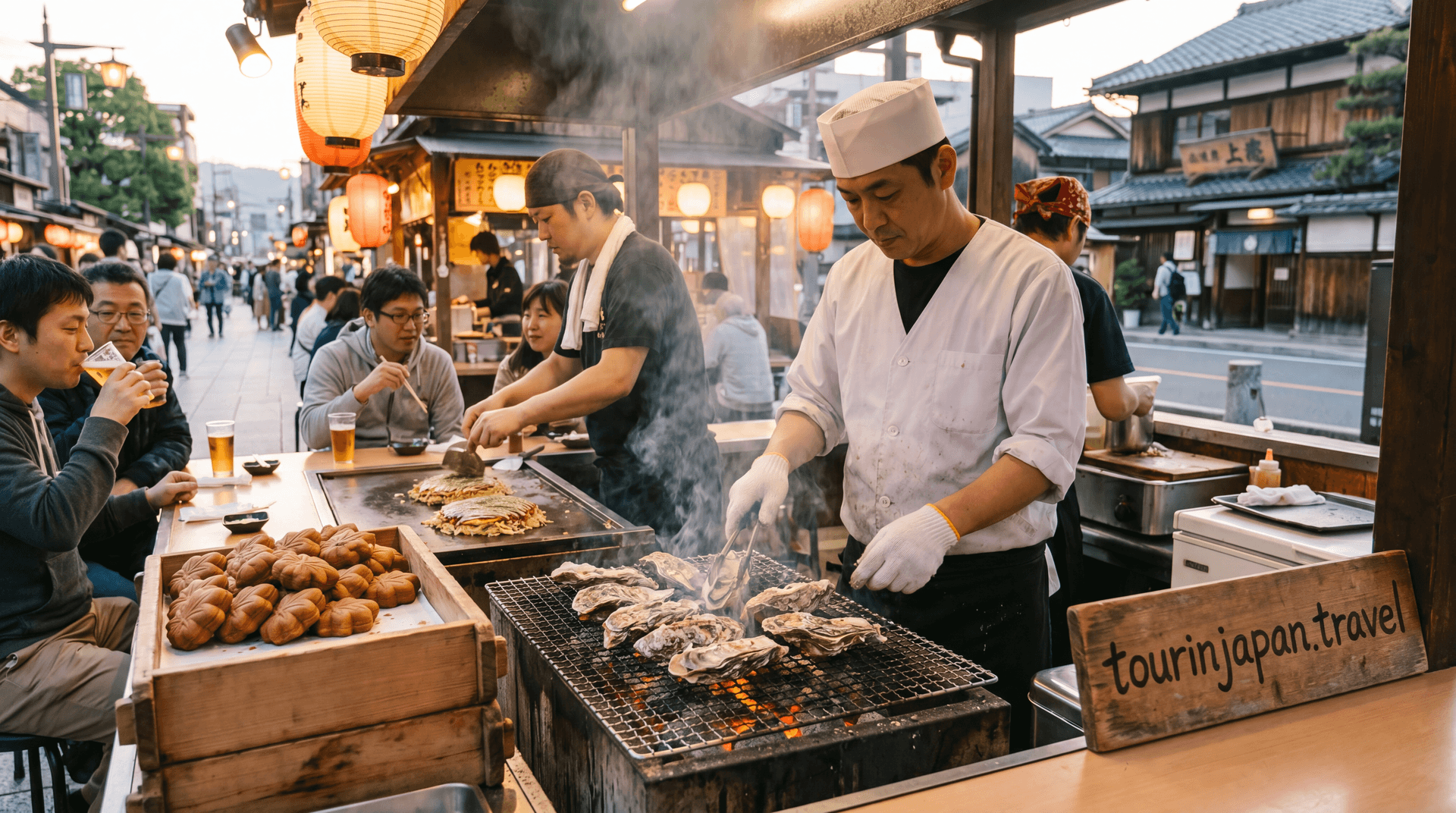
Hiroshima is one of Japan's most underrated food cities. While Osaka gets all the okonomiyaki fame, Hiroshima has its own distinctive version — a layered masterpiece that's completely different from the Osaka style. Add in the Seto Inland Sea's incredible oysters, fresh seafood, and unique local dishes, and Hiroshima becomes a must-visit for food lovers.
What Makes Hiroshima Food Special
| Factor | Impact |
|---|---|
| Seto Inland Sea | Rich oyster and seafood production |
| Peace legacy | Resilient food culture, community eating |
| Layered okonomiyaki | Unique cooking technique |
| Oyster capital | 60% of Japan's oyster production |
| Local sake | Excellent breweries nearby |
Essential Hiroshima Foods
1. Hiroshima-Style Okonomiyaki (広島風お好み焼き)
Completely different from Osaka-style
| Feature | Hiroshima Style | Osaka Style |
|---|---|---|
| Batter | Thin, crepe-like | Thick, mixed |
| Layers | Stacked separately | Mixed together |
| Noodles | Always included (yakisoba or udon) | Optional |
| Cabbage | Massive pile, steamed | Mixed into batter |
| Cooking | 15–20 minutes | 5–8 minutes |
| Egg | Fried separately, placed on top | Mixed in |
How it's made (step by step):
- Thin batter spread on griddle
- Mountain of shredded cabbage placed on top
- Pork belly slices added
- Noodles (yakisoba or udon) cooked separately
- Everything stacked layer by layer
- Egg fried separately, placed on top
- Brushed with sweet brown sauce
- Topped with mayo, bonito flakes, seaweed
Best okonomiyaki shops:
| Restaurant | Location | Price | Notes |
|---|---|---|---|
| Nagata-ya (ながたや) | Nagarekawa | ¥1,000–¥1,500 | Since 1950, iconic |
| Hassho (はっしょう) | downtown | ¥1,000–¥1,500 | Local favorite |
| Okonomimura (お好み村) | downtown | ¥800–¥1,500 | Building with 24 shops |
| Kanawa (かぬわ) | Miyahama | ¥1,500–¥2,000 | Waterfront setting |
| Tetsu (鉄) | Nagarekawa | ¥800–¥1,200 | Budget-friendly |
2. Hiroshima Oysters (牡蠣 / Kaki)
Hiroshima produces 60% of Japan's oysters:
| Preparation | Description | Price |
|---|---|---|
| Grilled (焼き牡蠣) | Charcoal-grilled in shell | ¥500–¥1,000 |
| Fried (牡蠣フライ) | Breaded and deep-fried | ¥800–¥1,500 |
| Raw (生牡蠣) | Fresh, straight from sea | ¥1,000–¥2,000 |
| Oyster rice (牡蠣ご飯) | Steamed with oysters | ¥1,500–¥2,500 |
| Oyster hot pot (牡蠣鍋) | Simmered with vegetables | ¥2,000–¥3,000 |
Best oyster spots:
- Miyajima (宮島) — Grilled oysters at the floating torii
- Kure (呉) — Oyster farms, freshest possible
- Oyster Hut (牡蠣小屋) — Seasonal shacks (Nov–Mar)
Oyster season: November–March (peak: December–February)
3. Tsukemen (つけ麺)
Hiroshima-style dipping noodles:
| Feature | Details |
|---|---|
| Noodles | Thick, cold, chewy |
| Broth | Hot, rich, spicy |
| Dipping | Noodles dipped into broth |
| Origin | Hiroshima invention (1960s) |
| Price | ¥800–¥1,200 |
Best tsukemen: Hakata-ya (博多屋), since 1965
4. Momiji Manju (もみじ饅頭)
Hiroshima's signature sweet:
| Feature | Details |
|---|---|
| Shape | Maple leaf (momiji) |
| Filling | Red bean paste (original) |
| Variations | Chocolate, custard, matcha, cheese |
| Price | ¥100–¥200 each |
| Where | Miyajima, souvenir shops |
5. Hiroshima Sake (広島酒)
Hiroshima is one of Japan's top sake regions:
| Brewery | Location | Specialty | Tour |
|---|---|---|---|
| Kamiki (神亀) | Miyosho | Traditional | Yes |
| Kireteru (キレットル) | Saijō | Modern, fresh | Yes |
| Fujii (藤居) | Saijō | Premium daiginjo | Yes |
| Tenrei (天玲) | Hiroshima | Artisanal | Yes |
Saijō Sake District: Walking distance between 7 breweries, sake tasting tours available
Best Restaurants
Hiroshima City
| Restaurant | Type | Specialty | Price |
|---|---|---|---|
| Nagata-ya | Okonomiyaki | Hiroshima-style | ¥1,000 |
| Okonomimura | Food building | 24 okonomiyaki shops | ¥1,000 |
| Hassho | Okonomiyaki | Budget-friendly | ¥800 |
| Kanawa | Okonomiyaki | Waterfront | ¥1,500 |
| Hiroshima Station | Market | Ekiben, bento | ¥1,500 |
Miyajima Island
| Restaurant | Type | Specialty | Price |
|---|---|---|---|
| Miyajima Oyster Huts | Grilled | Fresh oysters | ¥1,000 |
| Momiji Manju Shops | Sweets | Maple leaf cakes | ¥200 |
| Udon shops | Noodles | Thick udon | ¥800 |
| Grilled eel | Unagi | Freshwater eel | ¥2,500 |
Kure
| Restaurant | Type | Specialty | Price |
|---|---|---|---|
| Kure Oyster Farms | Farm | Fresh oysters | ¥2,000 |
| JMS Kure | Restaurant | Naval-themed | ¥3,000 |
How to Eat Hiroshima Okonomiyaki
Ordering Guide
- Choose your noodles: Yakisoba (brown) or Udon (white)
- Choose extras: Cheese, mochi, egg, extra pork
- Wait patiently: It takes 15–20 minutes to cook
- Eat from the corner: Don't mix the layers
- Use the spatula: Cut and eat with the small spatula provided
Toppings
- Original: Just sauce and mayo
- With bonito flakes: Traditional, adds umami
- With seaweed: More savory
- With cheese: Modern twist, very popular
Budget Guide
| Category | Budget | Mid-range | Luxury |
|---|---|---|---|
| Okonomiyaki | ¥800 | ¥1,200 | ¥2,000 |
| Oysters | ¥500 (grilled) | ¥1,500 (set) | ¥3,000 (raw) |
| Tsukemen | ¥800 | ¥1,000 | ¥1,500 |
| Momiji manju | ¥100 | ¥200 | ¥500 (gift box) |
| Sake | ¥500 | ¥1,000 | ¥3,000 (premium) |
Tips for First-Timers
- Go to Okonomimura — building with 24 okonomiyaki shops, pick your favorite
- Try oysters in winter — November to March is peak season
- Visit Miyajima — grilled oysters with the floating torii view
- Order yakisoba noodles — they're more traditional than udon
- Visit Saijō sake district — walk between 7 breweries
- Buy momiji manju — iconic souvenir, try the chocolate version
- Try tsukemen — Hiroshima's unique dipping noodle invention
- Eat at the station — Hiroshima Station has great ekiben (train bento)
Japanese Phrases
| Japanese | Pronunciation | Meaning |
|---|---|---|
| お好み焼きお願いします | Okonomiyaki onegai shimasu | "Okonomiyaki, please" |
| やきそばでお願いします | Yakisoba de onegai shimasu | "With yakisoba noodles" |
| 牡蠣を食べたいです | Kaki wo tabetai desu | "I want to eat oysters" |
| おすすめは何ですか? | Osusume wa nan desu ka? | "What do you recommend?" |
| ごちそうさまでした | Gochisōsama deshita | "Thank you for the meal" |
Related Articles
Stay Connected in Japan
Yesim eSIMs work on arrival — no physical SIM needed. Japan data plans from $5.