
Higashiyama: Kyoto's Most Beautiful Street and How to Walk It
By Tour in Japan editors · Updated
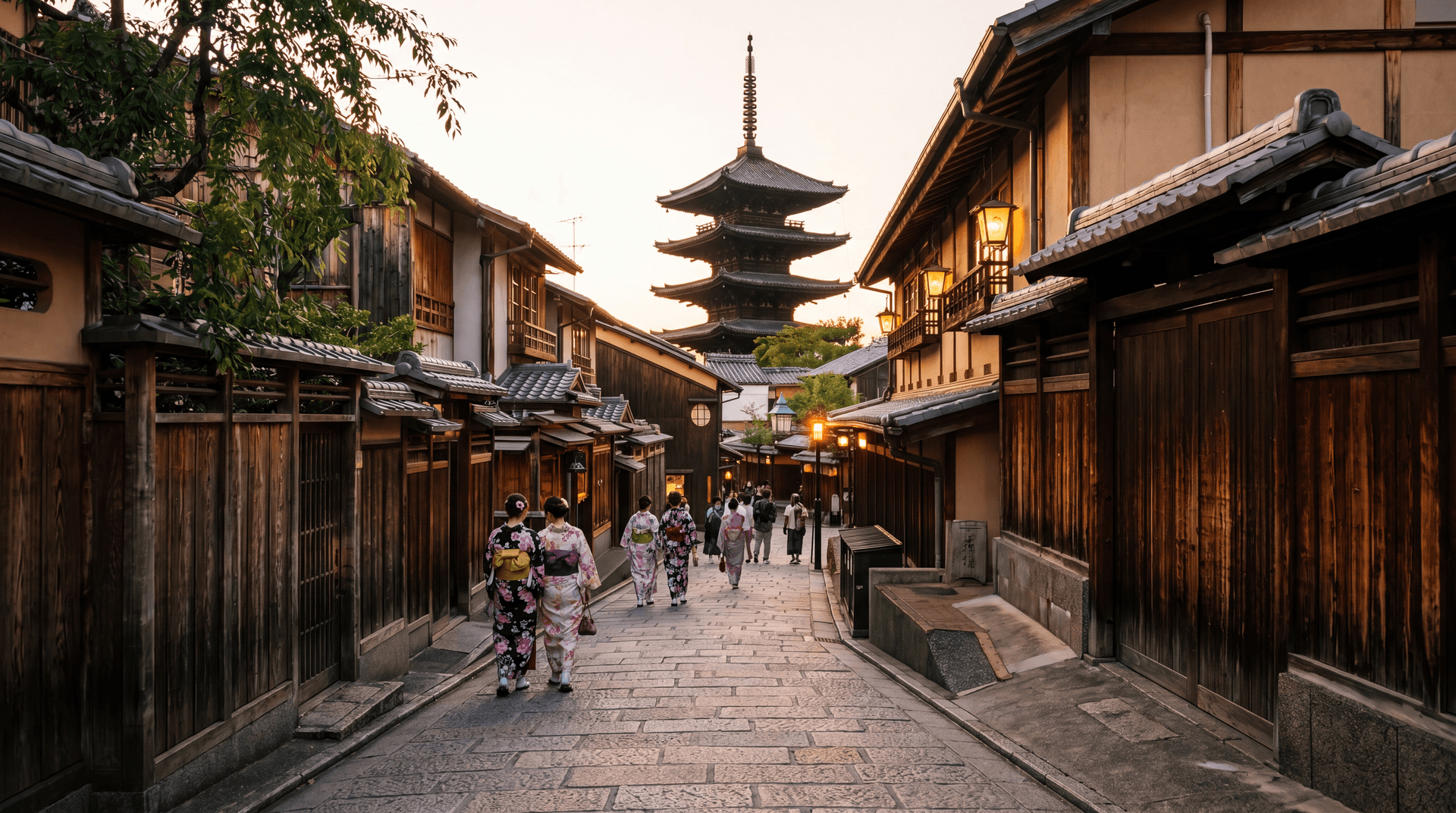
Higashiyama's stone-paved lanes connecting Kiyomizu-dera to Gion pass through the most concentrated stretch of traditional Kyoto architecture anywhere in the city.
Higashiyama is the hillside district east of Kyoto's city center where the most photogenic stretch of traditional Japanese urban architecture has survived largely intact. The Higashiyama Kyoto guide walk runs approximately two kilometers from Kiyomizu-dera Temple at the south end to Chion-in and Shoren-in at the north end, passing through a continuous landscape of machiya townhouses converted to craft shops and restaurants, stone-paved lanes lined with pottery sellers, and small temples tucked into garden courtyards. The challenge is timing: done at 7:00 AM, it is one of Japan's most beautiful urban walks. Done at 11:00 AM on a weekend, it is a traffic jam in costume.
Sannenzaka, Ninenzaka, and Nene no Michi
The core of the Higashiyama walk runs through Sannenzaka and Ninenzaka, two stone-stepped lanes of wooden buildings that are among Kyoto's most-replicated images. Sannenzaka (Third Year Hill) and Ninenzaka (Second Year Hill) connect at a corner marked by a bamboo fence that photographs well in all seasons. The buildings date from the Edo period and are protected as Important Preservation Districts for historic buildings. Most now operate as shops selling Kyoto crafts: Kiyomizu-yaki pottery, matcha sweets, bamboo goods, and washi paper.
Nene no Michi continues north from the preserved lanes and is named after Nene, the widow of warlord Toyotomi Hideyoshi. The path is wider and less crowded than Sannenzaka and runs along a stone wall above the Maruyama Park lotus ponds.
Key Temples Along the Route
Kiyomizu-dera at the south end (400 yen) is essential but deserves its own morning. Kodai-ji Temple (600 yen) halfway along the route has exceptional moss gardens and is illuminated at night during autumn. Chion-in at the north end has the largest temple gate in Japan, the Sanmon, which stands 24 meters tall and is a National Treasure. Shoren-in next to it has camphor trees over a thousand years old that shade the entrance path.
Shopping and Food on the Walk
Higashiyama has excellent craft shopping if you move past the mass-produced souvenir shops at the main intersections. Asahi-do on Sannenzaka specializes in Kiyomizu-yaki pottery and has been operating since 1870. Yojiya sells theatrical cosmetics used by maiko and geisha, including the famous blotting paper that absorbs facial oils without disturbing makeup. Tsujiri matcha tea shop near Maruyama Park serves matcha soft serve (500 yen) that is considered among Kyoto's finest.
- Best time to walk: 7 AM to 8:30 AM, before shops open and before tour groups arrive from buses
- Sannenzaka and Ninenzaka: free to walk, shops open from 9 AM to 5 PM
- Kiyomizu-dera: 400 yen, open from 6 AM, stage views best in morning and evening light
- Kodai-ji: 600 yen, excellent autumn foliage, night illuminations November to December
- Chion-in: free outer precinct, 500 yen for gardens, Sanmon gate is the largest in Japan
- Yojiya cosmetics: blotting paper sets from 700 yen, excellent Japanese beauty products
- Walk ends in Gion naturally; combine the two for a full traditional Kyoto day
The full route from Kiyomizu-dera to Chion-in takes ninety minutes at a walking pace without stops, or four to five hours with temple visits and shopping. Bus 207 from Kyoto Station stops near Kiyomizu-dera (230 yen). Walking north from Kiyomizu-dera ends in Gion, making the combination of Higashiyama and Gion a natural full-day itinerary. An evening return along Nene no Michi when the stone lanterns are lit is one of Kyoto's finest experiences.
Stay Connected in Japan
Yesim eSIMs work on arrival — no physical SIM needed. Japan data plans from $5.