
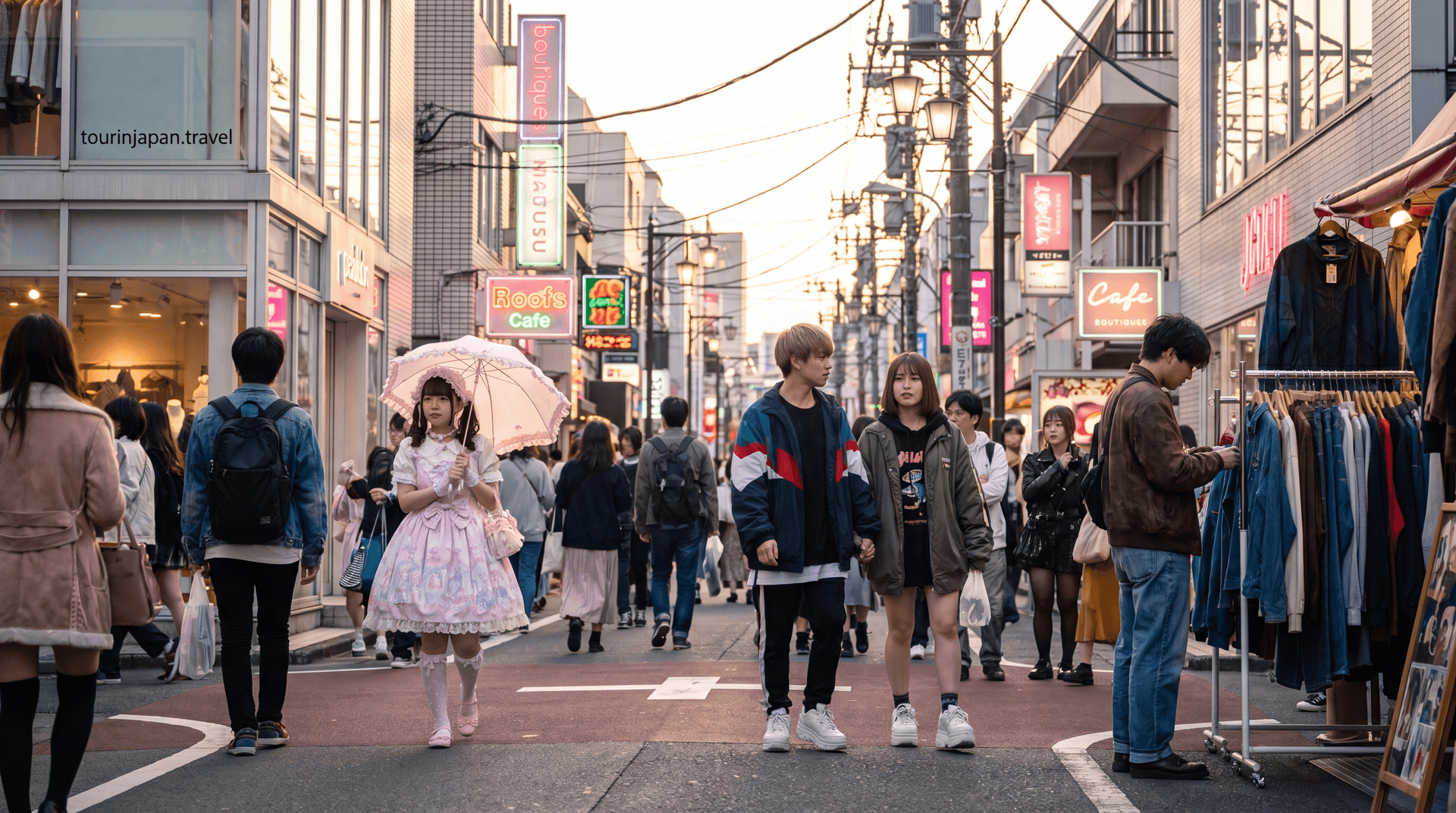
Harajuku Fashion Guide: Lolita, Streetwear, and Vintage Markets
By Tour in Japan editors · Updated
Harajuku is Japan's fashion capital — from Gothic Lolita boutiques on Takeshita-dori to high-end streetwear on Omotesando and vintage finds in Cat Street.
Harajuku fashion guide searches lead travelers to one of Tokyo's most visually electric neighborhoods — and rightly so. The Harajuku district around Takeshita-dori and the parallel Omotesando Boulevard hosts one of the most dense concentrations of clothing retailers, boutiques, and subculture fashion stores on Earth. From the candy-colored Gothic Lolita shops of Takeshita Street to the global luxury flagship stores of Omotesando and the curated vintage racks of Cat Street, Harajuku satisfies every tier of fashion interest.
Takeshita-dori: Colorful Streetwear and Subculture
Takeshita Street (Takeshita-dori) is a 350-meter pedestrian shopping street connecting Harajuku Station to the Meiji-dori intersection. It is packed with youth fashion, accessories, cosplay supplies, and fast food stalls catering to Japan's teenage shopping culture. Key shops include Bodyline (budget Gothic Lolita and cosplay), Spinns (casual streetwear with vintage-influenced aesthetic), and multiple crepe stands selling the street's signature snack (500-700 yen).
The side streets branching off Takeshita-dori contain smaller boutiques specializing in Fairy Kei (pastel, 80s-influenced kawaii), Decora (accessory-maximalist style), and Mori Girl (natural, forest-inspired fashion). Visiting on a Sunday morning offers the best chance of seeing elaborately dressed subculture fashion followers in person.
Omotesando and High Fashion
Omotesando Boulevard runs parallel to Harajuku's youth fashion scene but caters to a completely different market. The tree-lined avenue hosts flagship stores for every major international luxury brand plus Japanese high-fashion labels. Comme des Garcons, Issey Miyake, Yohji Yamamoto, and Kenzo have their most impressive flagship stores here. The Omotesando Hills complex, designed by Tadao Ando, houses multiple mid-to-high range fashion brands in a striking spiral architecture.
Harajuku Fashion Shopping Overview
- Takeshita-dori — youth fashion, Gothic Lolita, cosplay accessories, crepes
- Ura-Harajuku (Cat Street) — streetwear boutiques, vintage, independent labels
- Omotesando Hills — Tadao Ando architecture, mid-to-high fashion brands
- Laforet Harajuku — 6-floor shopping complex focused on Japanese youth brands
- Kiddy Land Harajuku — character goods, anime, Sanrio, Ghibli merchandise
- WEGO Harajuku — affordable vintage-inspired streetwear popular with teens
- Chicago Thrift Store, Shimokitazawa — best vintage finds 20 min from Harajuku
Vintage Markets and Second-Hand Fashion
Japan's second-hand clothing market is enormous and world-class. Cat Street between Harajuku and Shibuya is dotted with curated vintage boutiques selling 1980s Americana, Japanese archive pieces, and high-end vintage brands. Prices are higher than US thrift stores but the curation is exceptional. For budget vintage, Shimokitazawa — accessible by Odakyu Line from Shinjuku — is Tokyo's designated vintage neighborhood with dozens of shops selling 1970s-2000s Japanese and Western clothing from 500-3,000 yen per item.
The Harajuku neighborhood is accessible directly from Harajuku Station on the JR Yamanote Line or Meiji-jingumae Station on the Tokyo Metro Chiyoda and Fukutoshin Lines. The neighborhood is most lively on weekends, with Sunday afternoon offering peak foot traffic on Takeshita-dori.
Stay Connected in Japan
Yesim eSIMs work on arrival — no physical SIM needed. Japan data plans from $5.