
Goshuin Stamp Collecting: How to Start Your Temple Seal Book
By Tour in Japan editors · Updated
Goshuin are hand-written calligraphy stamps from temples and shrines, collected in special accordion books. Here is how to start your own goshuin collection in Japan.
Goshuin collecting has become one of the most popular activities among visitors to Japan's temples and shrines, and for good reason: each goshuin is a unique handwritten piece of art, combining calligraphy and red ink seals, created specifically for you at the moment of your visit. The goshuin — literally honorable red seal — is an ancient tradition that originally served as proof that a pilgrim had visited a sacred site. Today it has evolved into a treasured intersection of religious practice and artistic appreciation. Starting your own goshuin shuincho (stamp book) is easy, inexpensive, and provides a meaningful record of your travels through Japan that is far more personal than any photograph.
What Is a Goshuin
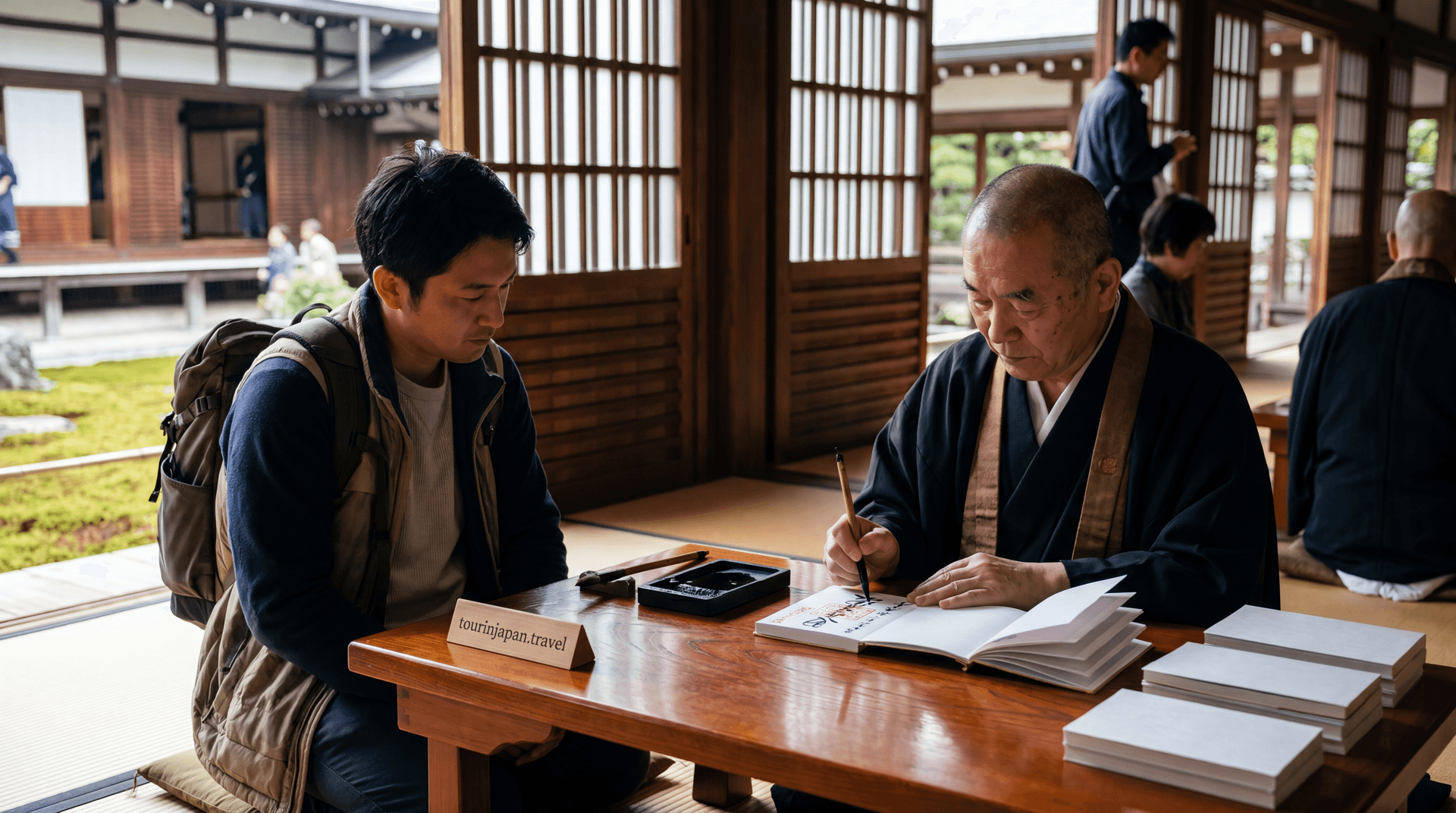
A goshuin consists of red ink seals stamped on the page, followed by hand-written calligraphy recording the name of the deity or Buddha enshrined at the location, the name of the temple or shrine, and the date of your visit. Some locations add elaborate decorative elements — gold leaf, hand-drawn illustrations, or seasonal motifs. No two goshuin are identical because each is written by hand, usually by a priest, shrine maiden, or temple staff member trained in calligraphy. The finished result is a living document of your pilgrimage, with each page reflecting the unique character of a different sacred place.
Getting Your First Shuincho
The accordion-folded paper book used for collecting goshuin is called a goshuincho or shuincho. You can buy one at almost any major temple or shrine for 1,000 to 2,000 yen. They come in various sizes — the standard A6 size is most practical for travel, while slightly larger books allow more room for elaborate calligraphy. Many temples sell beautiful goshuincho with covers depicting their famous artwork or seasonal motifs, making the book itself a keepsake.
To receive a goshuin, bring your book to the goshuin-jo (stamp office) or nofusatsu-jo, which is usually near the main hall. Hand your open book to the attendant with both hands and say Goshuin wo onegaishimasu (Please give me a goshuin). You will be asked to wait while it is written — usually 5 to 15 minutes. The fee is typically 300 to 500 yen, paid when you collect your book. Do not rush or express impatience — the calligraphy requires concentration and is a form of religious practice for the person writing it.
Best Locations for Exceptional Goshuin
- Senso-ji (Asakusa, Tokyo): One of the most elaborate goshuin in Tokyo, with multiple seals and detailed calligraphy. The goshuin counter is near the main hall and usually has a short queue.
- Fushimi Inari (Kyoto): Multiple goshuin available at different points along the mountain path. The main shrine goshuin features the distinctive red torii gate imagery.
- Ise Jingu (Mie): Japan's most sacred shrine complex. Two separate goshuin available — one for the Outer Shrine (Geku) and one for the Inner Shrine (Naiku). Very beautiful, restrained design.
- Nikko Tosho-gu (Tochigi): Elaborate baroque-style shrine produces particularly intricate goshuin reflecting the ornate architecture.
- Eiheiji Temple (Fukui): Major Soto Zen training temple. The goshuin here is written by a Zen monk in training — simple and powerful.
- Koyasan temples (Wakayama): Multiple temples on the sacred mountain offer distinctive goshuin; a single overnight visit can yield 5-10 unique stamps.
Etiquette and Tips
Always enter the temple or shrine grounds and pay your respects before requesting a goshuin — it is a religious document, not a tourist stamp, and receiving it without entering is considered disrespectful. Some sites have introduced ticketing systems or require you to write your own date in the book due to demand; these instructions will be posted at the counter. Keep your goshuincho dedicated to its purpose — mixing goshuin pages with ordinary photos or notes is considered inappropriate. When the book is full, it should be treated reverently: do not discard it, as it represents your spiritual journeys.
Stay Connected in Japan
Yesim eSIMs work on arrival — no physical SIM needed. Japan data plans from $5.