
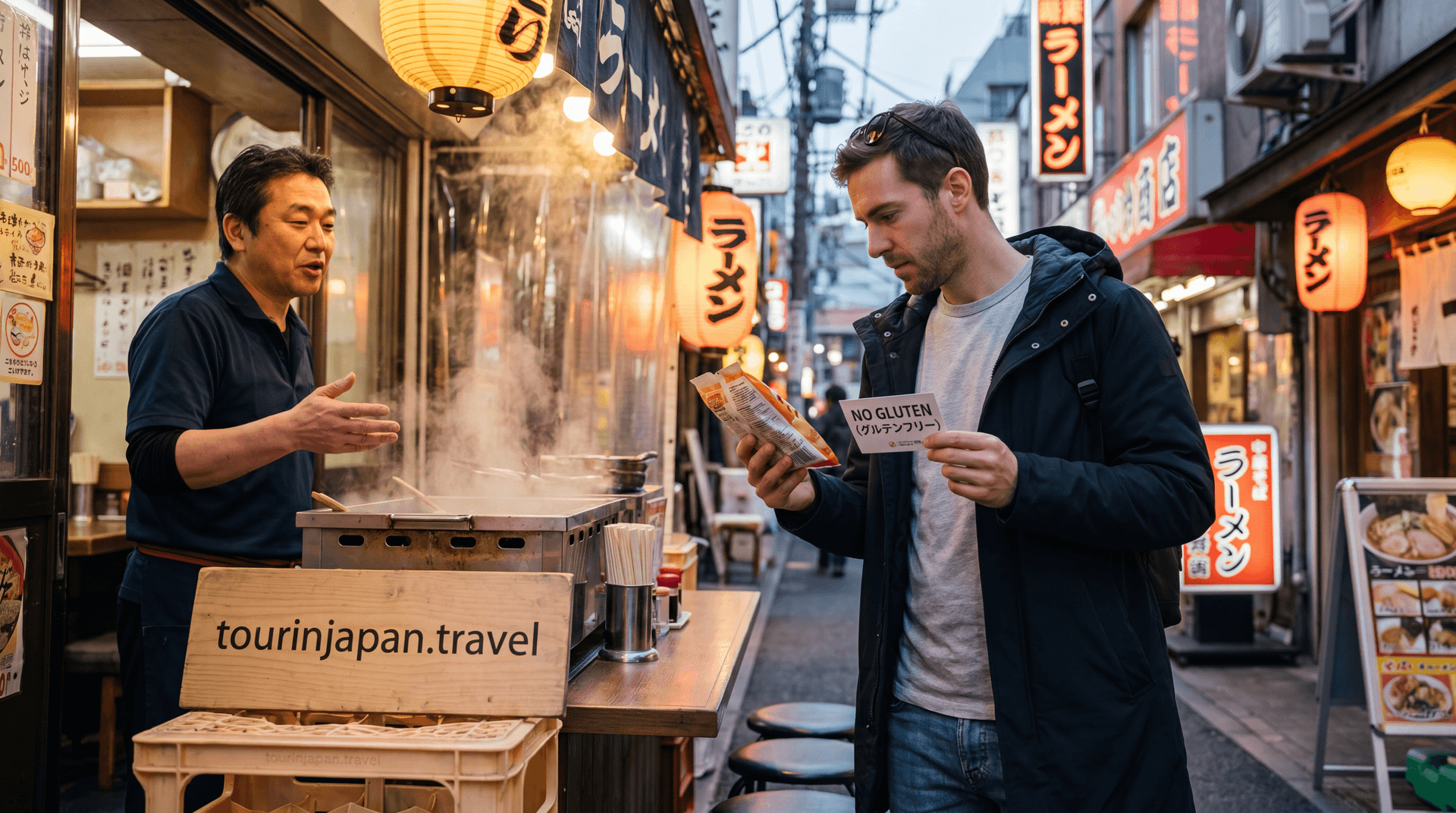
Gluten-Free Japan: How to Navigate Restaurants and Convenience Stores
By Tour in Japan editors · Updated
Eating gluten-free in Japan requires knowing which sauces and broths contain wheat. This guide explains what to avoid, what is safe, and how to communicate your needs.
Eating gluten-free in Japan is more challenging than it first appears. Rice is the foundation of the Japanese diet, so many traditional dishes seem safe — but soy sauce (shoyu), the single most ubiquitous ingredient in Japanese cooking, contains wheat. Most miso pastes, many dashi stocks, teriyaki sauces, and even some types of tofu use wheat in processing. For travelers with celiac disease or serious gluten intolerance, navigating gluten-free Japan requires understanding which staples are safe, which are not, and how to communicate clearly with restaurant staff. With preparation, however, Japan is very manageable — many traditional dishes are naturally gluten-free, and awareness among restaurants in major cities is growing.
The Soy Sauce Problem
Standard Japanese soy sauce (shoyu) is brewed from a mix of soybeans and wheat. This means virtually any dish seasoned with soy sauce — which includes most grilled meats, simmered dishes, noodle soup bases, sushi rice, and dipping sauces — contains gluten. Tamari, the thicker, darker soy sauce associated with sashimi, is traditionally wheat-free (though some commercial tamari contains a small percentage of wheat, so check labels carefully). Gluten-free tamari (labeled mutenka or komugi nashi) is available in health food shops and some supermarkets.
Carrying a small bottle of gluten-free tamari is a practical strategy for restaurant visits. You can use it on plain rice, sashimi, and grilled fish or meat in place of the house soy sauce. Several Japanese brands including Kikkoman and Yamasa produce certified gluten-free tamari that is widely sold; international airports often stock it in departure duty-free stores.
What Is Generally Safe to Eat
- Plain steamed rice (gohan): Always safe. Onigiri with simple fillings (plain salmon, umeboshi plum) are generally fine but check the packaging for soy-based seasonings.
- Sashimi: Raw fish served without soy sauce is safe. Ask for tamari or bring your own small bottle.
- Yakitori (plain salt/shio version): Chicken skewers seasoned with only salt are wheat-free. The tare (sauce) version contains soy sauce — specify shio when ordering.
- Plain tofu: Silken or firm tofu without seasoning. Cold tofu (hiyayakko) is safe if you skip the soy sauce topping.
- Edamame: Boiled salted soybeans. A completely safe and delicious snack. Available at izakayas and convenience stores.
- Mochi: Pure rice cakes are wheat-free. Check packaged mochi for added soy sauce glazes.
- Fresh fruit and vegetables: Widely available in supermarkets, depachika, and convenience stores. Safe as long as not seasoned with soy-based dressings.
Communicating Your Needs in Japanese
The key phrase is: Komugi arerugi ga arimasu — I have a wheat allergy. For celiac disease: Seriakku byo desu. Following with: Shoyu, mugi, komugi wo tsukawanai ryori wo onegai shimasu (Please prepare food without soy sauce, barley, or wheat) gives enough detail for most kitchens to work with. Restaurant cards printed in Japanese explaining your situation are available through Celiac Travel, Allergy Eats Japan, and similar resources — carry one at all times.
At convenience stores, look for products labeled mutenka (additive-free) or kosher certified, as both categories tend to use less soy sauce in processing. Many convenience stores now stock gluten-free noodles and sauces in their health food sections, particularly in larger urban stores. The Coeliac Japan website maintains an updated list of certified gluten-free restaurants in Tokyo and Osaka that is invaluable for pre-trip planning.
Stay Connected in Japan
Yesim eSIMs work on arrival — no physical SIM needed. Japan data plans from $5.