
Gion Matsuri 2026: Kyoto's Greatest Festival Complete Guide
By Tour in Japan editors · Updated
Gion Matsuri fills all of July with parades, rituals, and lantern-lit evenings in Kyoto. Here is the complete guide to attending Japan's most celebrated festival in 2026.
Gion Matsuri is Japan's most famous festival, and no description fully prepares you for the experience. Held throughout the entire month of July at Yasaka Shrine in Kyoto's Gion district, this 1,100-year-old festival began as a religious purification rite to appease the gods during a devastating plague in 869 CE. What evolved over the following millennium into a month-long series of rituals, neighborhood celebrations, and spectacular float processions is today considered one of the three great festivals of Japan and a UNESCO Intangible Cultural Heritage. For visitors, Gion Matsuri in 2026 represents an unparalleled window into living Japanese tradition — combining religious ceremony, extraordinary craftsmanship in the float construction, and the genuine community participation that sets it apart from tourist-oriented events.
Understanding the Two-Part Structure
Since its restoration in 2014, Gion Matsuri has returned to its historical two-part structure. The Saki Matsuri (first festival) culminates in the Yamaboko Junko float procession on July 17. The Ato Matsuri (latter festival) climaxes with a second procession on July 24. Both processions follow a route through central Kyoto, with floats — some weighing 12 tonnes and requiring 50 men to pull — moving through streets lined with hundreds of thousands of spectators.
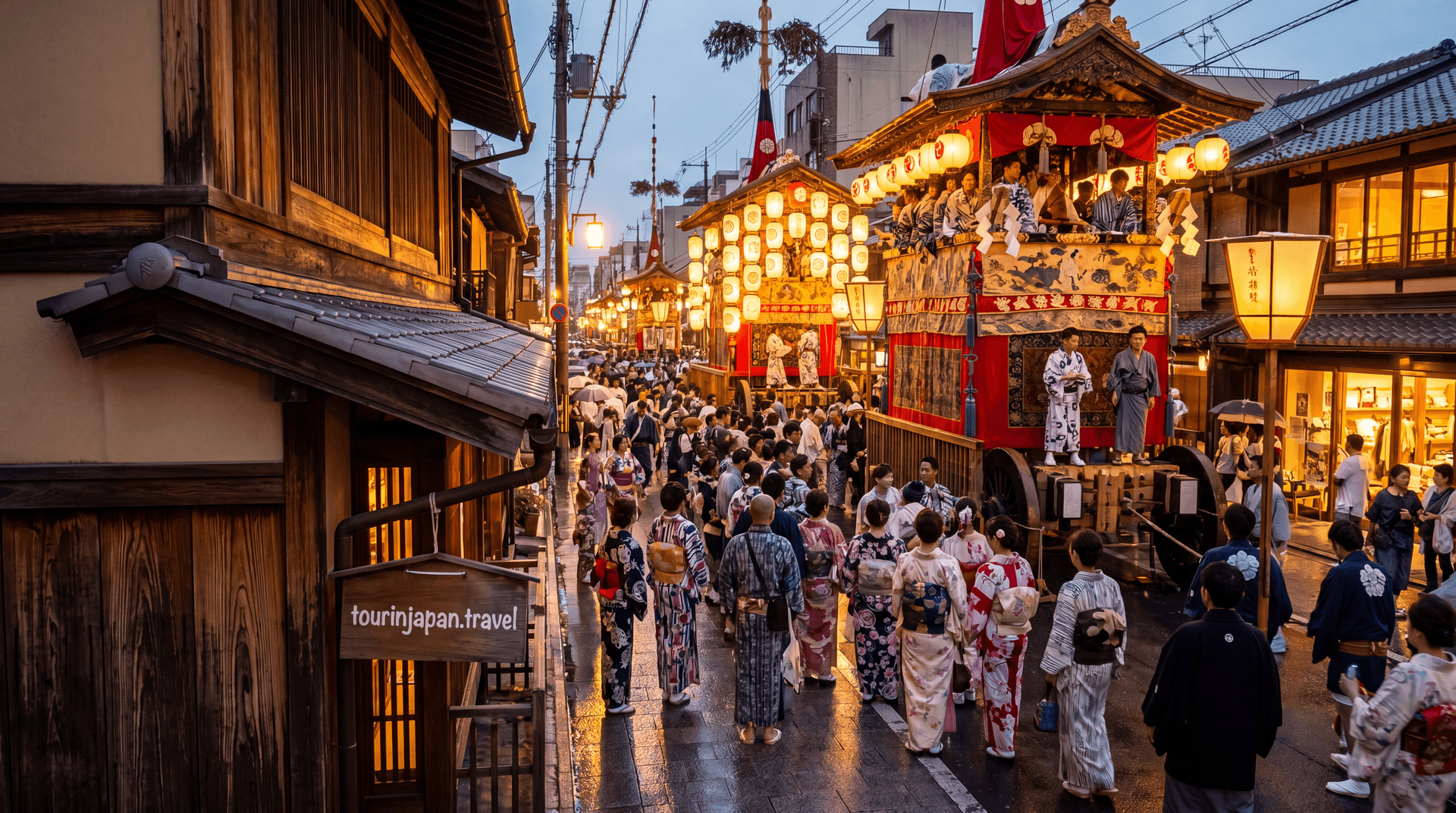
The floats themselves are extraordinary artifacts. The 33 floats (yama and hoko) are constructed entirely without nails — traditional rope binding techniques (chinowa kazari) hold the structures together. The tapestries adorning the floats include priceless examples of medieval Flemish, Persian, and Chinese weaving that arrived in Japan through 16th-century trade routes. Several floats carry musicians who play haunting kagura music throughout the procession.
The Yoiyama Evenings: July 14-16 and 21-23
The three evenings before each procession — called yoiyama — are arguably even more magical than the day itself. The floats are assembled in the streets of central Kyoto and illuminated with paper lanterns from approximately 6 PM. The surrounding streets become pedestrianized, traditional food stalls (yatai) appear, and residents emerge in yukata to stroll and eat. The atmosphere is warm, communal, and deeply Japanese.
- Best viewing spots: Shijo-Karasuma and Shijo-Kawaramachi intersections for the July 17 procession. Arrive 90 minutes early for a spot at the front.
- Paid viewing stands: Set up along the procession route, costing 2,000-4,000 yen. Seats with unobstructed views sold through the Kyoto Tourism Association.
- Balcony rentals: Some machiya townhouses along the route open their balconies to paying guests for a bird's-eye view. Priced 8,000-20,000 yen per person including lunch.
- Yoiyama street food: Corn, yakisoba, takoyaki, and kakigori (shaved ice) stalls line the streets. The traditional sweets sold by participating merchant families are worth seeking out.
- Chimaki and lucky charms: Each float neighborhood sells distinctive chimaki rice dumplings (not edible — displayed at home for luck) and handmade lucky charms unique to their float.
Accommodation and Logistics
Kyoto accommodation in July — particularly July 14-24 — sells out many months in advance. Book by January at the latest for the peak procession weekends. Prices rise significantly during the festival period, with central hotels often doubling their standard rates. Staying in Osaka and commuting to Kyoto by train (25 minutes on the Shinkansen, 15 minutes on the Haruka express, or 30 minutes on the regular Hankyu line) is a practical alternative that opens up more accommodation options at better prices.
Wear light clothing and bring a folding fan, portable fan, and large water bottle — July in Kyoto is extremely hot and humid, with temperatures regularly exceeding 35 degrees Celsius and high humidity making the experience physically demanding. The yoiyama evenings are slightly cooler and more comfortable than the daytime processions. A quick train out to Kyoto's northern hills for a temple visit in the morning before returning for the evening festivities is the ideal day structure.
Stay Connected in Japan
Yesim eSIMs work on arrival — no physical SIM needed. Japan data plans from $5.