
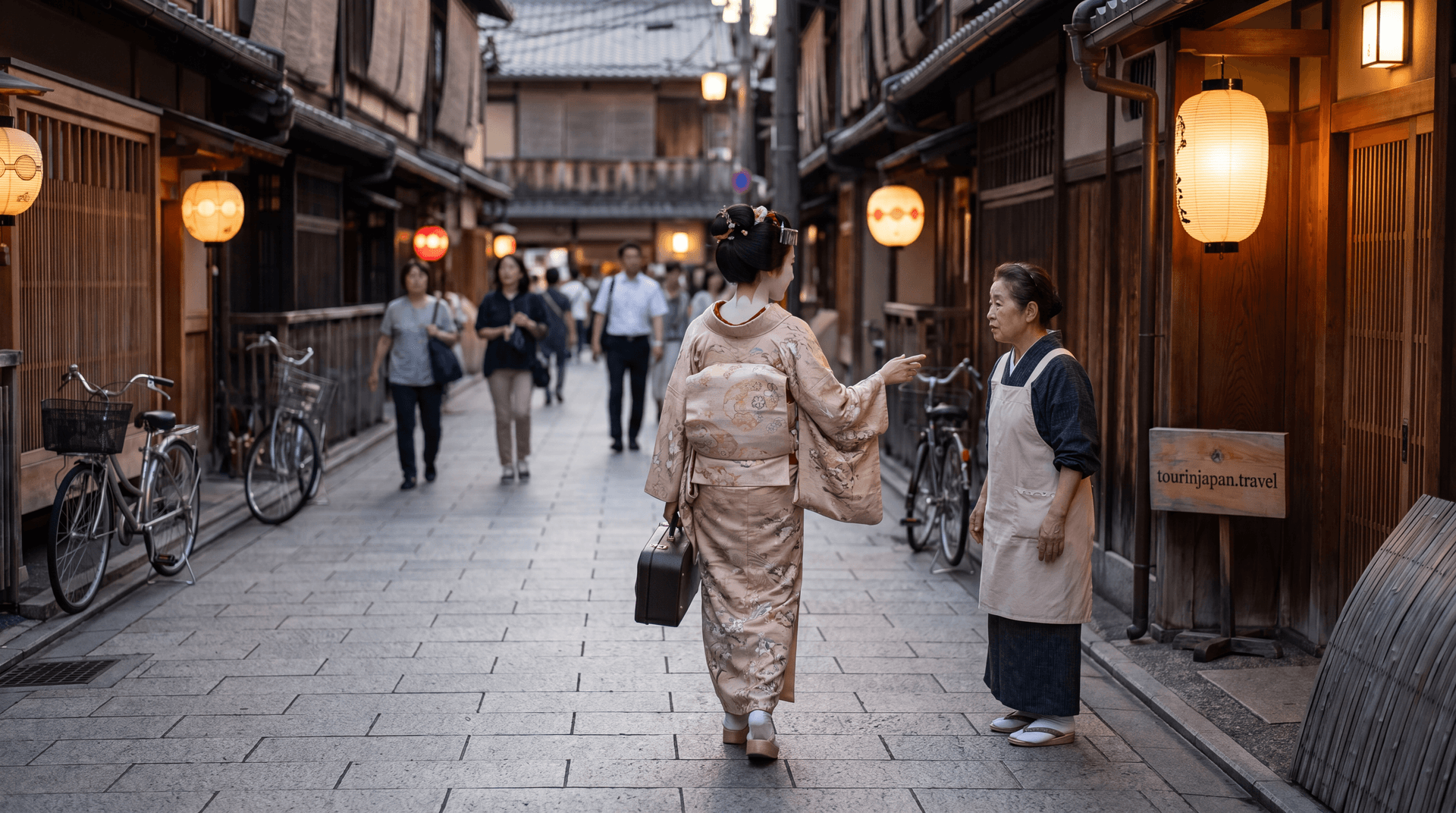
How Geisha Culture Really Works: Facts, Misconceptions, and Respect
By Tour in Japan editors · Updated
Geisha (芸者) are misunderstood by many Westerners. Here's the truth about these skilled artists.
Geisha (芸者) are misunderstood by many Westerners. Here's the truth about these skilled artists.
What Is a Geisha?
A geisha is a traditional Japanese female entertainer — skilled in dance, music, conversation, and the tea ceremony. They are artists, not prostitutes.
Key Facts
| Fact | Details |
|---|---|
| Meaning | "Art person" (芸者) |
| Training | 5+ years of rigorous training |
| Skills | Dance, music, conversation, tea ceremony |
| Costume | Kimono, white makeup, elaborate hairstyle |
| Location | Mostly Kyoto (Gion district) |
Common Misconceptions
Myth vs Reality
| Myth | Reality |
|---|---|
| "Geisha are prostitutes" | ❌ False — they are artists |
| "Geisha marry customers" | ❌ False — many marry and retire |
| "Any woman can be geisha" | ❌ False — requires years of training |
| "Geisha wear white makeup always" | ❌ False — only for performances |
| "Geisha are a dying art" | ❌ False — new geisha train every year |
Types of Entertainers
| Term | Meaning | Stage |
|---|---|---|
| Maiko (舞子) | Apprentice geisha | 1–5 years training |
| Geiko (芸妓) | Kyoto term for geisha | Full geisha |
| Geisha (芸者) | General term | Full geisha |
| Oiran (花魁) | Historical courtesan | Edo period (not modern) |
Where to See Geisha
Kyoto (Gion District)
| Spot | What to See | Best Time |
|---|---|---|
| Hanami-koji | Geisha walking to appointments | 5:30–6:30 PM |
| Gion Corner | Cultural performances | Evening |
| Miyako Odori | Annual geisha dance | April |
| Gion Kappa | Dinner with geisha entertainment | Evening |
Other Cities
| City | Where |
|---|---|
| Tokyo | Asakusa, Kagurazaka |
| Osaka | Minami |
| Kanazawa | Higashi Chaya |
How to Respect Geisha Culture
Do's
- ✅ Observe from a distance — don't chase with cameras
- ✅ Be quiet — they're working
- ✅ Attend a performance — Miyako Odori, Gion Corner
- ✅ Eat at a tea house — some offer geisha entertainment
- ✅ Learn about the art — it's fascinating
Don'ts
- ❌ Don't block their path — they're going to appointments
- ❌ Don't touch their kimono — it's expensive and personal
- ❌ Don't ask for photos — unless they offer
- ❌ Don't follow them — invasion of privacy
- ❌ Don't confuse with oiran — historical courtesans, not modern
Where to See Performances
| Performance | When | Where | Price |
|---|---|---|---|
| Miyako Odori | April | Gion Corner | ¥4,000–6,000 |
| Gion Corner | Daily | Gion | ¥3,000–4,000 |
| Kamogawa Odori | May & Nov | Pontochō | ¥4,000–6,000 |
| Geisha dinner | Evening | Various tea houses | ¥10,000–30,000 |
Tips
- Visit Gion in the evening — best chance to see geisha
- Be respectful — observe from distance
- Attend a performance — see their artistry
- Learn the difference — geisha are artists, not what movies show
- Don't chase — let them work in peace
- Support the art — attend shows, visit tea houses
- Ask questions — locals love explaining the culture
- Enjoy the experience — it's magical
📱Get a Japan eSIM
Stay Connected in Japan
Yesim eSIMs work on arrival — no physical SIM needed. Japan data plans from $5.