Fukuoka: A Compact Base for Exploring Kyushu
Fukuoka packs yatai street food, ancient sites such as Dazaifu Tenmangu and easy rail links across Kyushu into a walkable centre.
Affiliate link — we may earn a commission at no extra cost to you. Affiliate disclosure
Fukuoka: A Compact Base for Exploring Kyushu
Fukuoka is the most populated city in Kyushu, Japan's southern main island (source). It packs ancient sites, a distinctive street-food culture and easy rail access to the rest of Kyushu into a compact, walkable centre. A ferry also links Hakata Port with Busan in South Korea, taking about 5 hours 30 minutes and running roughly six times a week (source).
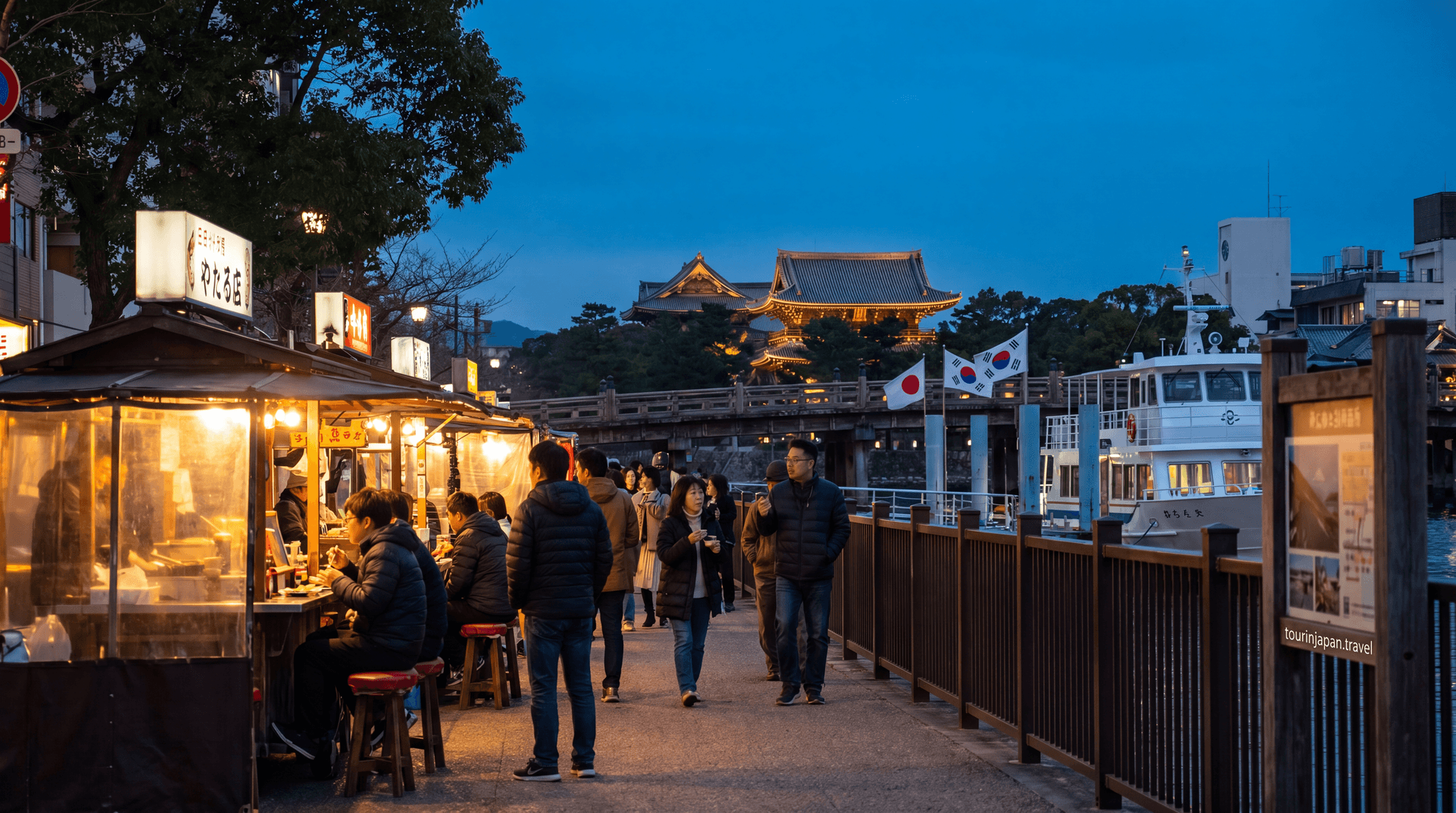
Yatai: Fukuoka's Street Food Stalls
Fukuoka's yatai are open-air food stalls that appear in the evening. Around 100 operate in the city, and as of the end of January 2024, 103 held permits to trade on public land — close to 90% of all yatai in Japan. The same survey found 39 stalls with staff who speak a foreign language and 69 with foreign-language menus, and more stalls now accept credit cards and QR code payments (source).
Most stalls open from around 6 pm, with 6:30–7 pm the most common time. Closing days vary by stall, and stalls may shut suddenly in bad weather, so check each stall's social media or phone ahead. Ramen, oden and yakitori are the staples, alongside French and other international cooking, bars and coffee (source). About ten people fill a stall, and most do not take reservations — you are seated in the order you arrive. Going alone is fine; solo diners are common, and you are more likely to get talking to the owner or regulars. Check the price list before ordering, as some stalls have an otoshi (seating charge) or a one-order rule. There are no toilets at yatai, so ask the owner for the nearest one; nearby public toilets and partner convenience stores can be used, and the underground mall toilets stay open until 12:30 am (source). Stalls also trade over the New Year holidays, though fewer than usual.
You can check which stalls are open on a given day through the FUKUOKA GUIDE LINE account, which uses IoT lightbulbs fitted to stalls to detect when they are switched on (source).
Dazaifu and Ancient Sites
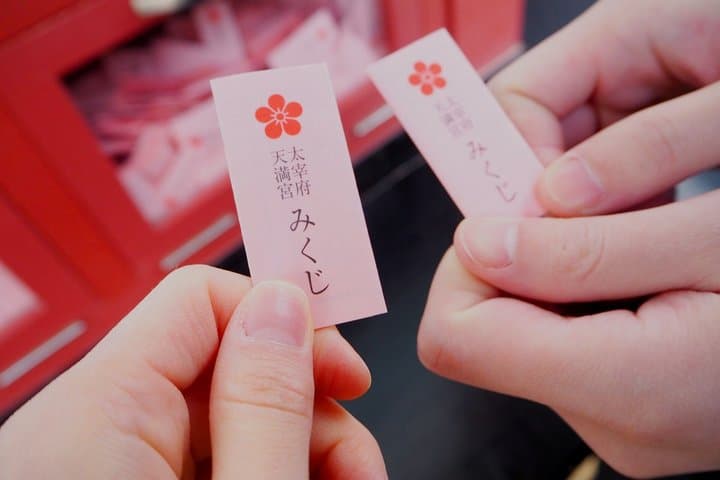
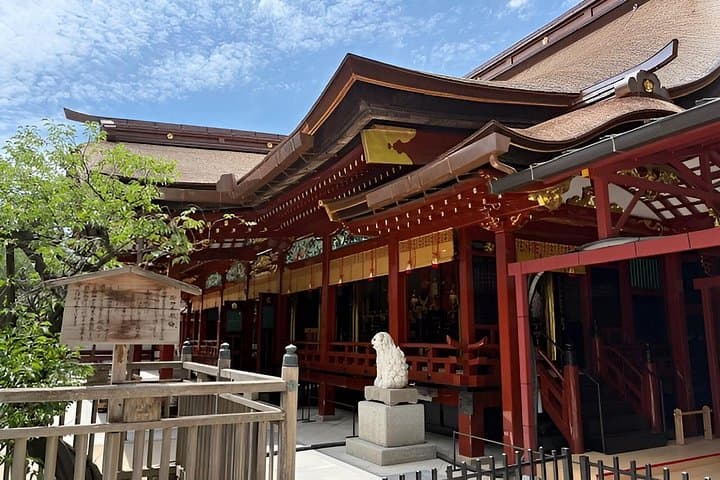
Dazaifu Tenmangu is about 15 km from Fukuoka and roughly 30 minutes from Nishitetsu Fukuoka (Tenjin) Station by train; the walk from Dazaifu Station takes about five minutes (source). The shrine is known for amulets for academic success and for passing exams, sold at counters in the main hall complex, and its plum trees usually bloom from late January to early March. There is no entrance fee for the grounds and main sanctuary, though the on-site museums and nearby attractions charge. The Fukuoka City Tourist Pass gives discounts at the Dazaifu Tenmangu Museum, the Kanko Historical Museum, Dazaifu Amusement Park, Kyushu National Museum and the exhibition space at Kanzeonji Temple (source).
Kyushu National Museum is next door and about a five-minute walk from the main sanctuary through the shrine grounds. It is open 9:30–17:00 with last admission at 16:30, and closed on Mondays (or the following day when Monday is a public holiday). Admission to the cultural exchange exhibition is ¥700 for adults, ¥350 for university students, and free for high-school students and under and for visitors aged 70 and over; check the current price before you go (source). The museum also has a café and a teahouse with a footbath, both closed on Mondays (source).
Kushida Shrine, the tutelary shrine of Hakata, is the focus of the Hakata Gion Yamakasa festival, which runs from 1 to 15 July. Decorated floats are displayed around the city from 1 July, and the climax on 15 July begins at 4:59 am, when the first of the carried floats enters the shrine grounds (source).
Fukuoka as a Kyushu Base
Hakata Station is the main transport hub, and Kyushu Shinkansen services run from there to Kumamoto and Kagoshima-chūō (source). Fukuoka itself is reachable by Shinkansen from Tokyo in about five hours, from Kyoto in under three hours and from Osaka in a little over two hours (source). Check current timetables and fares before you travel.
- Hakata ramen: ramen is the classic yatai dish, served alongside oden and yakitori (source).
- Nakasu yatai: Nakasu is one of the main yatai districts, along with Tenjin and Nagahama (source).
- Fukuoka Airport: about five minutes from Hakata Station by subway (source).
Two to three nights in Fukuoka gives you time for the city and a day trip or two. Accommodation and restaurants are plentiful; check current prices and availability before you book. Beyond ramen and yatai, the city has a wide range of restaurants and bars.
Ready to explore Japan?
Browse tours and activities, or tell us what you're looking for and we'll suggest the best options.
Stay Connected in Japan
Airalo eSIMs work on arrival — no physical SIM needed. Data plans from $5 for 7 days.
Travel Insurance for Japan
Medical, trip cancellation, and adventure sports covered. Plans from $1.5/day.