
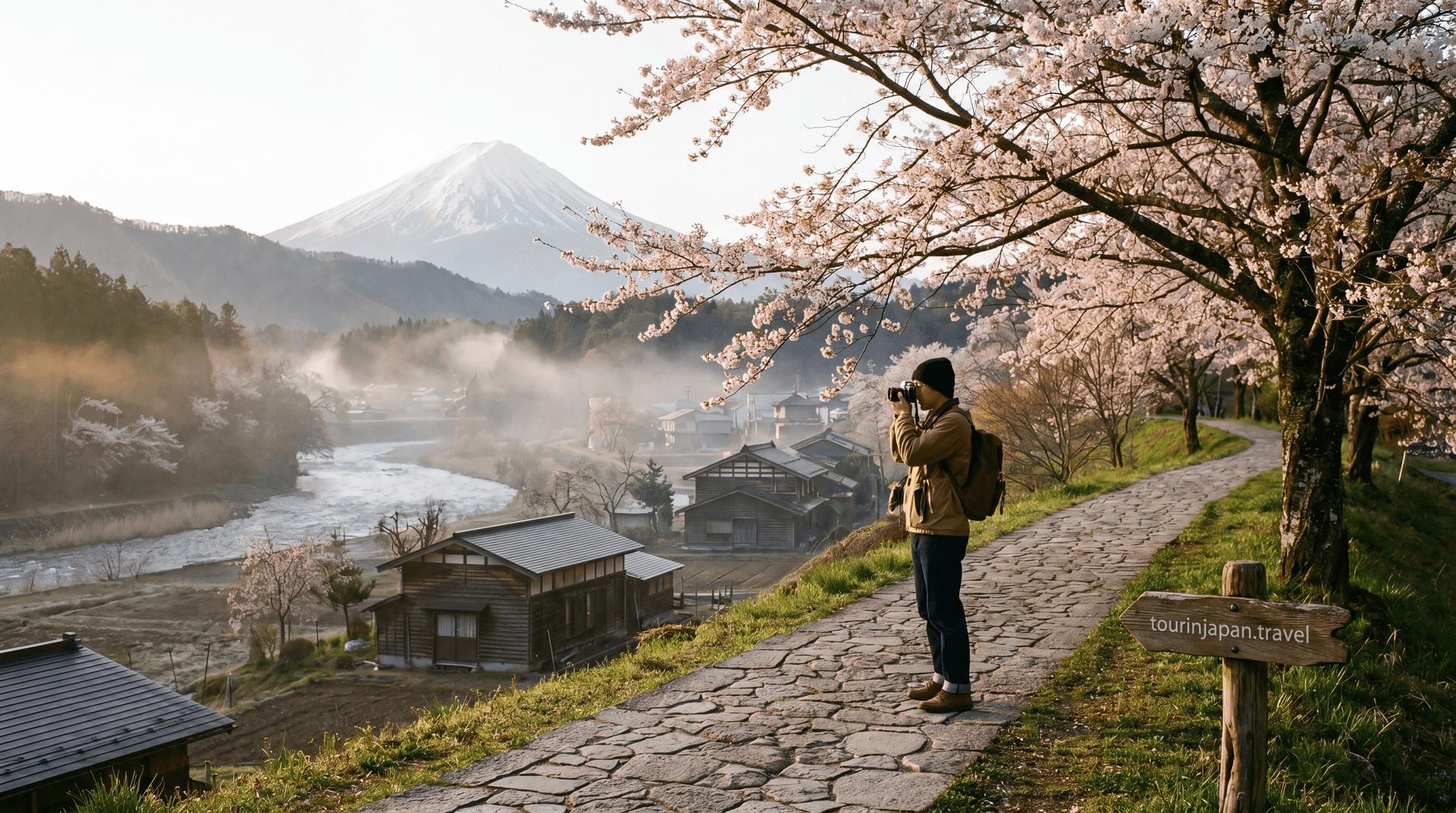
Cherry Blossoms Without Crowds: Secret Spots & Timing Guide
By Tour in Japan editors · Updated
cherry blossom without crowds
Japan's cherry blossom season is magical — but crowded. Here's how to enjoy the beauty without fighting for space.
Why Crowds Are Bad in 2026
- Record tourism: Japan expects 40+ million visitors in 2026
- Instagram effect: Top spots go viral and pack instantly
- Short window: Peak bloom lasts only 7–10 days
- Golden Week overlap: April 29 – May 5 crowds multiply everything
Timing Strategy
The Golden Rule: Go Early or Go Late
| Strategy | When | Why It Works |
|---|---|---|
| Dawn patrol | 5:30–7:00 AM | 90% fewer people, best light |
| Weekday visits | Tue–Thu | 50–70% fewer people than weekends |
| Pre-peak (70% bloom) | 3–5 days before full bloom | Still beautiful, much quieter |
| Late bloom (petals falling) | 3–7 days after peak | Hana-fubuki (petal blizzard) is magical |
| Night viewing | After dark | Fewer crowds, illuminated trees |
2026 Forecast by Region
| Region | Expected Bloom | Peak | Best Days |
|---|---|---|---|
| Kyushu | Mar 20–25 | Mar 28–Apr 2 | Mar 25–Apr 1 |
| Shikoku | Mar 25–30 | Apr 1–6 | Mar 28–Apr 5 |
| Kansai | Mar 28–Apr 2 | Apr 3–8 | Apr 1–7 |
| Chubu | Mar 30–Apr 5 | Apr 5–10 | Apr 3–9 |
| Kanto | Apr 1–5 | Apr 5–10 | Apr 3–9 |
| Tohoku | Apr 10–15 | Apr 15–20 | Apr 12–19 |
| Hokkaido | Apr 25–30 | May 1–6 | Apr 28–May 5 |
Secret Spots: No Crowds
Tokyo (Less Known)
| Spot | Location | Why It's Great | Crowds |
|---|---|---|---|
| Rikugien Garden | Komagome | Night illumination, weeping cherry | Low at dawn |
| Hamarikyu Gardens | Shiodome | Cherry + tidal bay combination | Low |
| Shinjuku Gyoen (early morning) | Shinjuku | 1,000+ trees, arrive at opening | Medium (early AM = low) |
| Mokubiji Temple | Nerima | Hidden temple, barely any visitors | Very Low |
| Inokashira Park | Kichijoji | Boat on pond under cherry trees | Low on weekdays |
| Yatsu Higata | Narashino | Cherry trees along tidal flats | Very Low |
| Kyodo no Mori | Fuchu | Museum park with cherry avenue | Low |
| Todoroki Valley | Setagaya | Cherry trees along ravine | Very Low |
| Saigaya | Setagaya | Residential cherry tunnel | Low |
| Kasai Rinkai Park | Edogawa | Waterfront cherry trees, Ferris wheel | Low |
Kyoto (Secret Spots)
| Spot | Location | Why It's Great | Crowds |
|---|---|---|---|
| Shosei-en Garden | Near Kyoto Station | Hidden gem, almost no tourists | Very Low |
| Toji Temple (early morning) | Near Kyoto Station | 5-story pagoda + cherry trees | Low at dawn |
| Daikaku-ji | Arashiyama outskirts | Cherry trees around a lake | Low |
| Ninna-ji Temple | Northwest Kyoto | Late-blooming Omuro cherry | Low (late April) |
| Gio-ji | Arashiyama | Moss garden + cherry trees | Low |
| Honen-in | Near Philosopher's Path | Thatched gate + cherry trees | Low |
| Otagi Nenbutsu-ji | Arashiyama | 1,200 stone statues + cherry trees | Very Low |
| Saga-Toriimoto | Arashiyama outskirts | Preserved street + cherry trees | Very Low |
| Kamigamo Shrine | North Kyoto | Ancient shrine, minimal tourists | Low |
| Fushimi Inari (upper trails) | South Kyoto | Most people stop at base — keep going | Low above mid-mountain |
Outside Major Cities
| Spot | Region | Why It's Great | Crowds |
|---|---|---|---|
| Yoshino (lower trails) | Nara | 30,000 trees, go beyond the base | Medium |
| Takato Castle | Nagano | Japan's best pink cherry variety | Low-Medium |
| Hirosaki Castle | Aomori | 2,600 trees + moat filled with petals | Low |
| Miharu Takizakura | Fukushima | 1,000-year-old single tree | Low |
| Kakunodate | Akita | Samurai district cherry avenue | Low |
| Mount Yoshino (upper trails) | Nara | Most tourists stay at the bottom | Low |
| Gujo Hachiman | Gifu | Water town + cherry reflection | Very Low |
| Tsuwano | Shimane | "Little Kyoto of San'in" | Very Low |
| Matsuyama (Dogō area) | Ehime | Castle + hot spring + cherry | Low |
| Himeji (evening) | Hyogo | Castle lit up at night, fewer crowds | Low |
Alternative Approaches
1. Follow the Bloom South-to-North
Most tourists cluster in Tokyo/Kyoto during peak. Instead:
| Week | Go To | Bloom Stage |
|---|---|---|
| Week 1 (late March) | Kyushu, Shikoku | Full bloom |
| Week 2 (early April) | Kansai, Chubu | Full bloom |
| Week 3 (mid April) | Kanto | Full bloom |
| Week 4 (late April) | Tohoku | Full bloom |
| Week 5 (early May) | Hokkaido | Full bloom |
This way you're always ahead of or behind the main tourist wave.
2. Cherry Blossoms by Night
Night illuminations (ライトアップ) draw fewer crowds:
| Location | Dates | Hours | Why It's Special |
|---|---|---|---|
| Kiyomizu-dera | Mar 25–Apr 5 | 18:00–21:30 | Temple lit up in cherry grove |
| Eikando | Mar 25–Apr 5 | 18:00–21:00 | Reflection in mirror pond |
| Kodai-ji | Mar 25–Apr 5 | 17:30–21:00 | Bamboo grove + cherry |
| Rikugien | Mar 25–Apr 5 | 18:00–20:30 | Weeping cherry, Tokyo's best |
| Hirosaki Castle | Apr 18–May 5 | 18:30–21:00 | Castle moat covered in petals |
| Takato Castle | Apr 1–Apr 15 | 18:00–21:00 | Pink glow of Takasugi cherry |
3. Hanami (花見) Like a Local
Skip the famous parks. Join locals at:
| Type | Where | Cost | Experience |
|---|---|---|---|
| Office building courtyard | Business districts | Free | Local salarymen hanami |
| University campus | Any city | Free | Students, casual atmosphere |
| Small neighborhood park | Residential areas | Free | Families, very local |
| Riverside | Any river with cherry trees | Free | Walking, relaxed |
| Temple grounds | Any temple | ¥300–500 | Peaceful, cultural |
4. Rent a Bike
Cycling through cherry blossom areas is peaceful and crowd-free:
| Route | Location | Distance | Highlights |
|---|---|---|---|
| Philosopher's Path (early AM) | Kyoto | 2 km | Canal-side cherry tunnel |
| Kamo River | Kyoto | 10 km | Cherry trees along riverbank |
| Meguro River | Tokyo | 8 km | Urban cherry avenue |
| Tama River | Tokyo | 15 km | Riverside cherry trees |
| Lake Kawaguchiko | Yamanashi | 18 km | Fuji + cherry blossoms |
Packing Checklist for Cherry Blossom Season
| Item | Why |
|---|---|
| Layers | March/April temperatures: 8–18°C |
| Light jacket | Mornings and evenings are cool |
| Compact umbrella | Spring rain is common |
| Picnic blanket | For hanami sessions |
| Snacks and drinks | For picnics under the trees |
| Camera with wide lens | Cherry tunnels need wide angle |
| Portable charger | Long days out shooting |
| Cash | Many parks have food stalls |
| Trash bag | Clean up after yourself (Japanese etiquette) |
How to Do Hanami Properly
Etiquette Rules
| Rule | Why |
|---|---|
| Bring a blue tarp | Standard hanami ground cover (blue = parks department) |
| Arrive early | Good spots fill up by 10 AM on weekends |
| Clean up everything | Leave the park cleaner than you found it |
| Don't reserve for strangers | Tarp = your spot, don't move other people's |
| Share food and drinks | Hanami is communal — offer your neighbors a drink |
| Quiet after 9 PM | Many parks enforce quiet hours |
| No loud music | Keep noise to your group |
What to Bring for Hanami
| Item | Budget | Mid-Range |
|---|---|---|
| Bento | ¥500–800 (konbini) | ¥1,500–3,000 (department store) |
| Drinks | ¥150–300 (vending machine) | ¥1,000–3,000 (sake/wine) |
| Snacks | ¥200–500 | ¥500–1,000 |
| Tarp | ¥500–1,000 (100-yen shop) | ¥2,000–3,000 (quality) |
| Total per person | ¥1,000–2,000 | ¥5,000–10,000 |
Sample "Crowd-Free" 3-Day Itinerary
Day 1: Tokyo (Secret Spots)
- 5:30 AM: Rikugien Garden (dawn, no crowds)
- 7:00 AM: Todoroki Valley (ravine cherry trees)
- 10:00 AM: Shinjuku Gyoen (arrive at opening)
- Afternoon: Hamarikyu Gardens (tidal bay + cherry)
- Evening: Meguro River night illumination
Day 2: Kyoto (Secret Spots)
- 6:00 AM: Fushimi Inari upper trails (no crowds above mid-mountain)
- 9:00 AM: Shosei-en Garden (hidden gem)
- 11:00 AM: Otagi Nenbutsu-ji (1,200 statues + cherry)
- Afternoon: Daikaku-ji (lake + cherry)
- Evening: Eikando night illumination
Day 3: Day Trip (Secret Spot)
- Morning: Takato Castle (Nagano) — Japan's pinkest cherry
- Afternoon: Miharu Takizakura (Fukushima) — 1,000-year-old tree
- Return to Tokyo evening
FAQ
Q: When is the best time to avoid crowds? A: Dawn (5:30–7:00 AM) on weekdays. Also pre-peak (3–5 days before full bloom) and late bloom (petal fall) are much quieter.
Q: Are there really empty cherry blossom spots? A: Yes — smaller temples, residential parks, and rural areas have far fewer tourists. Follow the tips above.
Q: Can I still do hanami without a group? A: Absolutely — solo hanami is common. Bring a book, enjoy the atmosphere, and you might make friends with neighboring groups.
Q: What if it rains during cherry blossom season? A: Rain actually makes the experience more atmospheric — fewer people and beautiful wet petals. Bring an umbrella and enjoy.
Useful Japanese Phrases
| Japanese | Romaji | English |
|---|---|---|
| 桜がきれいですね | Sakura ga kirei desu ne | The cherry blossoms are beautiful, aren't they? |
| 花見 | Hanami | Cherry blossom viewing |
| 花びらが舞っています | Hanabira ga matte imasu | The petals are dancing |
| この場所は靜かですね | Kono basho wa shizuka desu ne | This place is quiet, isn't it? |
| いい場所ですね | Ii basho desu ne | Nice spot, isn't it? |
Internal Links
- Cherry Blossom Forecast 2026
- Best Cherry Blossom Spots in Kyoto
- Best Cherry Blossom Spots in Tokyo
- Yoshino Cherry Blossom Guide
- Japan Autumn Foliage
FAQ Schema
<script type="application/ld+json"> { "@context": "https://schema.org", "@type": "FAQPage", "mainEntity": [ { "@type": "Question", "name": "When is the best time to see cherry blossoms without crowds?", "acceptedAnswer": { "@type": "Answer", "text": "Dawn (5:30-7:00 AM) on weekdays is best. Pre-peak (3-5 days before full bloom) and late bloom (petal fall) are also much quieter." } }, { "@type": "Question", "name": "What are the best secret cherry blossom spots in Tokyo?", "acceptedAnswer": { "@type": "Answer", "text": "Todoroki Valley, Mokubiji Temple, Kyodo no Mori, and Hamarikyu Gardens are excellent hidden spots with far fewer tourists." } } ] } </script>
Stay Connected in Japan
Yesim eSIMs work on arrival — no physical SIM needed. Japan data plans from $5.