
Cherry Blossom Photography Tips: Camera Settings, Light, and Timing
By Tour in Japan editors · Updated
Cherry blossom photography looks simple but demands specific techniques. Here are the camera settings, lighting conditions, and timing strategies for stunning sakura shots.
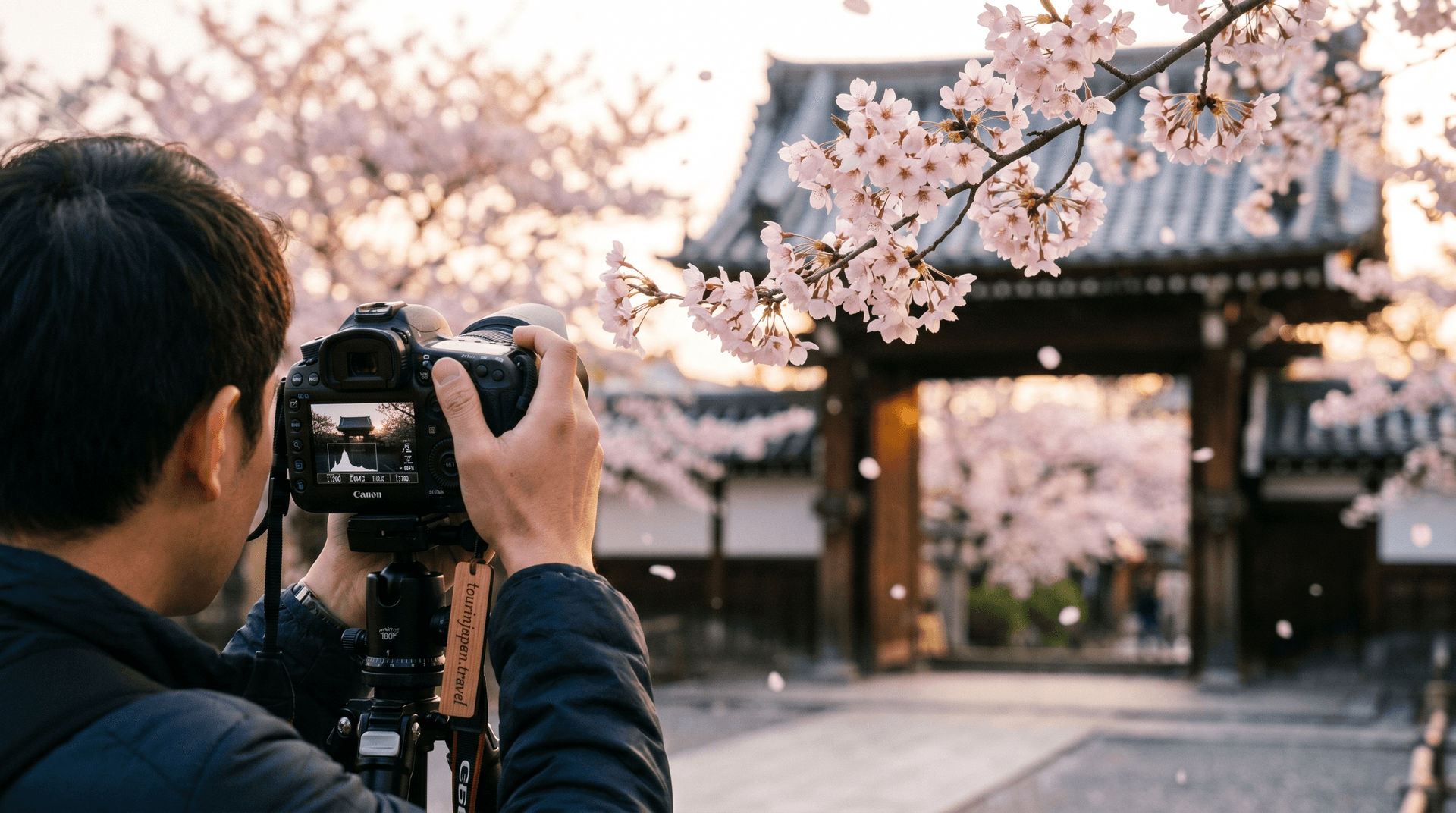
Cherry blossom photography tips that actually work go beyond simply pointing a camera at a pink tree and pressing the shutter. Sakura photography is technically demanding — the soft pastel tones of cherry blossoms can easily be blown out, the peak bloom window lasts only 7-10 days, and crowded viewing spots require creative strategies to isolate subjects. These cherry blossom photography tips cover the specific camera settings, lighting conditions, compositions, and timing windows that produce genuinely beautiful sakura images rather than the flat, overexposed snapshots that most visitors bring home.
Optimal Camera Settings for Cherry Blossoms
The biggest mistake with cherry blossom photography is exposing correctly for the sky and losing detail in the white-pink petals. Use exposure compensation of +0.3 to +0.7 stops to preserve bloom detail. Shoot in RAW format to retain the most editing flexibility — the subtle tonal range of pale blossoms benefits enormously from careful post-processing.
For close-up blossom shots, use apertures of f/1.8-f/2.8 to isolate individual flower clusters against a soft bokeh background. Telephoto lenses (85-200mm) compress the layers of blossoms and create dramatic compositions. A macro lens (100mm) reveals the extraordinary detail of individual sakura flowers — the stamens and graduated petal colors invisible to the naked eye.
Best Light and Timing for Sakura Photography
The ideal light for cherry blossoms is the soft, diffused light of overcast mornings or the warm golden hour just after sunrise. Direct midday sunlight is harsh on pale petals and washes out the delicate pink tones. Cloudy days — often dismissed by photographers — actually produce beautiful even lighting that renders sakura colors accurately without harsh shadows.
The most cinematic sakura images are taken in the last 2-3 days of bloom, when petals begin to fall (hanafubuki, literally flower blizzard). A gentle breeze sends showers of petals through the air that catch backlight beautifully. Rain days during peak bloom create reflections of petals in puddles and dark pavements that contrast dramatically with the pale pink above.
Cherry Blossom Photography Checklist
- Apply +0.3 to +0.7 exposure compensation to prevent blown petals in bright conditions
- Shoot in RAW for maximum flexibility with pale petal tones in post-processing
- Use wide apertures (f/1.8-f/2.8) for bokeh backgrounds that make blossoms pop
- Overcast mornings give the most accurate sakura color rendering without harsh shadows
- Golden hour after sunrise produces the warmest, most romantic sakura light
- Petal-fall days (days 8-10 of bloom) are the most cinematically beautiful to photograph
- Include human subjects for scale and emotion — a single person under full sakura trees creates powerful imagery
- Water reflections (Nakameguro canal, Chidorigafuchi moat) double your composition opportunities
The key to standing-out cherry blossom photography is thinking about what makes an image interesting beyond the blossoms themselves. A street lined with sakura is beautiful but common — the same street with a person in traditional kimono walking beneath the canopy, or a bicycle leaning against a trunk, or a vermilion torii gate at the end of the path, becomes a story. Plan your foreground and background elements before sakura season begins so you arrive with clear compositional intentions rather than simply reacting to what's in front of you.
Stay Connected in Japan
Yesim eSIMs work on arrival — no physical SIM needed. Japan data plans from $5.