
Capsule Hotels Japan: What to Expect, Best Options, Etiquette
By Tour in Japan editors · Updated
Japan's capsule hotels offer a uniquely efficient, affordable sleep — but there are rules and realities first-timers should know before booking.
Capsule hotels in Japan originated in Osaka in 1979 as a solution for salarymen who had missed the last train home. Today they have evolved into a distinct category of accommodation that ranges from functional budget sleep pods to sleek design-forward hostels with rooftop lounges and craft beer on tap. Spending at least one night in a Japanese capsule hotel is a genuine cultural experience — and at prices typically ranging from 3,000 to 5,500 yen per night in central Tokyo or Osaka, the value is hard to beat.
What Is Actually Inside a Capsule
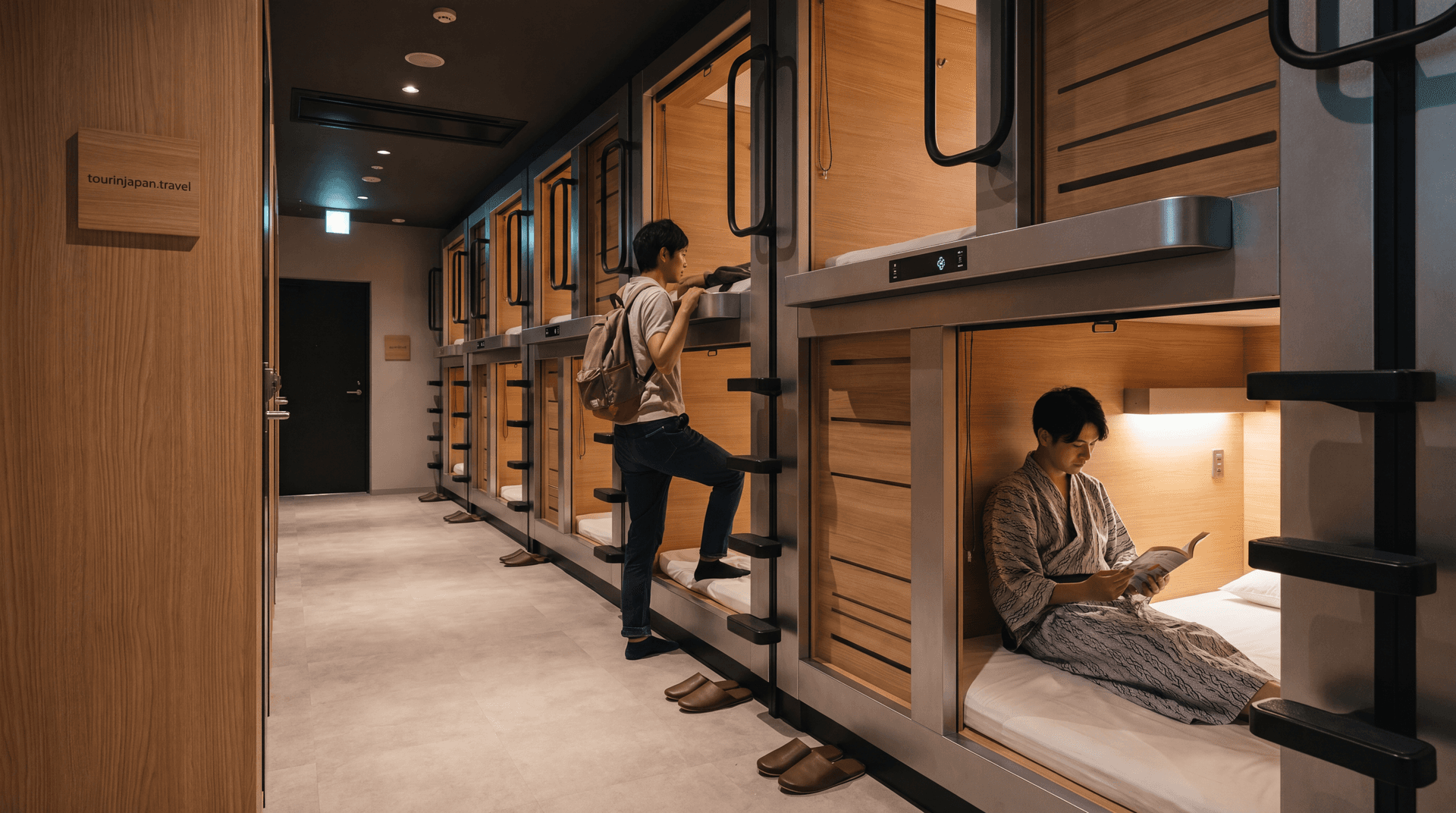
A standard capsule is roughly 2 meters long, 1 meter wide, and 1.25 meters tall — enough to sit up and extend your legs fully, but not to stand. Modern capsules typically include a small screen with TV channels, a USB charging port, an LED reading light on an adjustable arm, a small mirror, a locker for valuables, and a privacy blind or sliding door. Older capsule hotels use a simple roll-down blind; newer design-focused properties have sliding wooden or acrylic panels.
Bedding is provided — typically a pillow, sheet, and duvet or blanket. Most capsule hotels also include yukata (light cotton robe) in your pod. Luggage goes in a separate locker (usually coin-operated, 100-500 yen depending on size) in a shared corridor. The bathrooms are communal — expect large Japanese-style communal baths (onsen-style, with tiled soaking areas and shower stations) which is part of the experience.
Capsule Hotel Etiquette and Rules
Japanese capsule hotels run on quiet and consideration. The communal bath areas prohibit tattoos at many traditional establishments — newer, tourist-oriented properties have relaxed this, so check before booking if relevant. Noise after 10pm is frowned upon: phone calls should be taken to a common area, alarms should be set to vibrate. Most capsule hotels are gender-segregated by floor — women's floors often have additional amenities and separate bath areas. Mixed-gender properties now exist in newer boutique-style places.
Best capsule hotels in Japan by city and type
- Nine Hours Shinjuku (Tokyo): Design-forward, white pod aesthetic, central location, from 4,500 yen
- Book and Bed Tokyo (Shinjuku/Asakusa): Library-themed, capsules surround bookshelves, popular with travelers who love design
- Manga Cafe Diversey (nationwide): Not technically a hotel, but manga kissa overnight plans from 1,500 yen
- The MILLENNIALS Shibuya: Reclining smart pods with projectors, communal coworking lounge, modern design
- Osaka Shinsaibashi Capsule Hotel: Classic style near Dotonbori, large onsen, budget pricing from 3,000 yen
- Dormy Inn chain (nationwide): Business hotel hybrid with capsule pricing and full onsen floors; excellent value
- Green Plaza Shinjuku: Long-running classic capsule hotel, attached to onsen spa, popular with budget-conscious travelers
- Kyoto Hana Hostel: Women-only floor available, near Gion, capsule and dorm hybrid
When comparing capsule hotels, check whether the price includes use of the bath facilities — some properties charge separately for the onsen floor. Also verify checkout time: traditional capsule hotels often have strict check-out windows (8am-10am) with no late checkout option, which suits travelers with early trains but can be inconvenient otherwise. Booking.com and Jalan (Japanese booking platform) both list capsule hotels, and Jalan occasionally has last-minute deals not available internationally.
Stay Connected in Japan
Yesim eSIMs work on arrival — no physical SIM needed. Japan data plans from $5.