
Best Onsen in Tohoku: Nyuto Onsen, Ginzan, and Osorezan
By Tour in Japan editors · Updated
Tohoku's remote onsen hide in ancient forests and volcanic mountains. Discover the milky baths of Nyuto, the silver mining village of Ginzan, and the eerie Osorezan.
The best onsen in Tohoku reward the traveler willing to venture north of Tokyo into Japan's deeply traditional heartland. Tohoku's six prefectures contain some of the country's most remote and spiritually charged hot spring destinations, where the combination of pristine mountain wilderness, heavy snowfall, and centuries-old bathing culture creates an experience that feels genuinely ancient. Among the region's dozens of onsen towns, Nyuto Onsen, Ginzan Onsen, and the volcanic lake area of Osorezan stand as the most distinctive.
Nyuto Onsen: Seven Hidden Inns in a Beech Forest
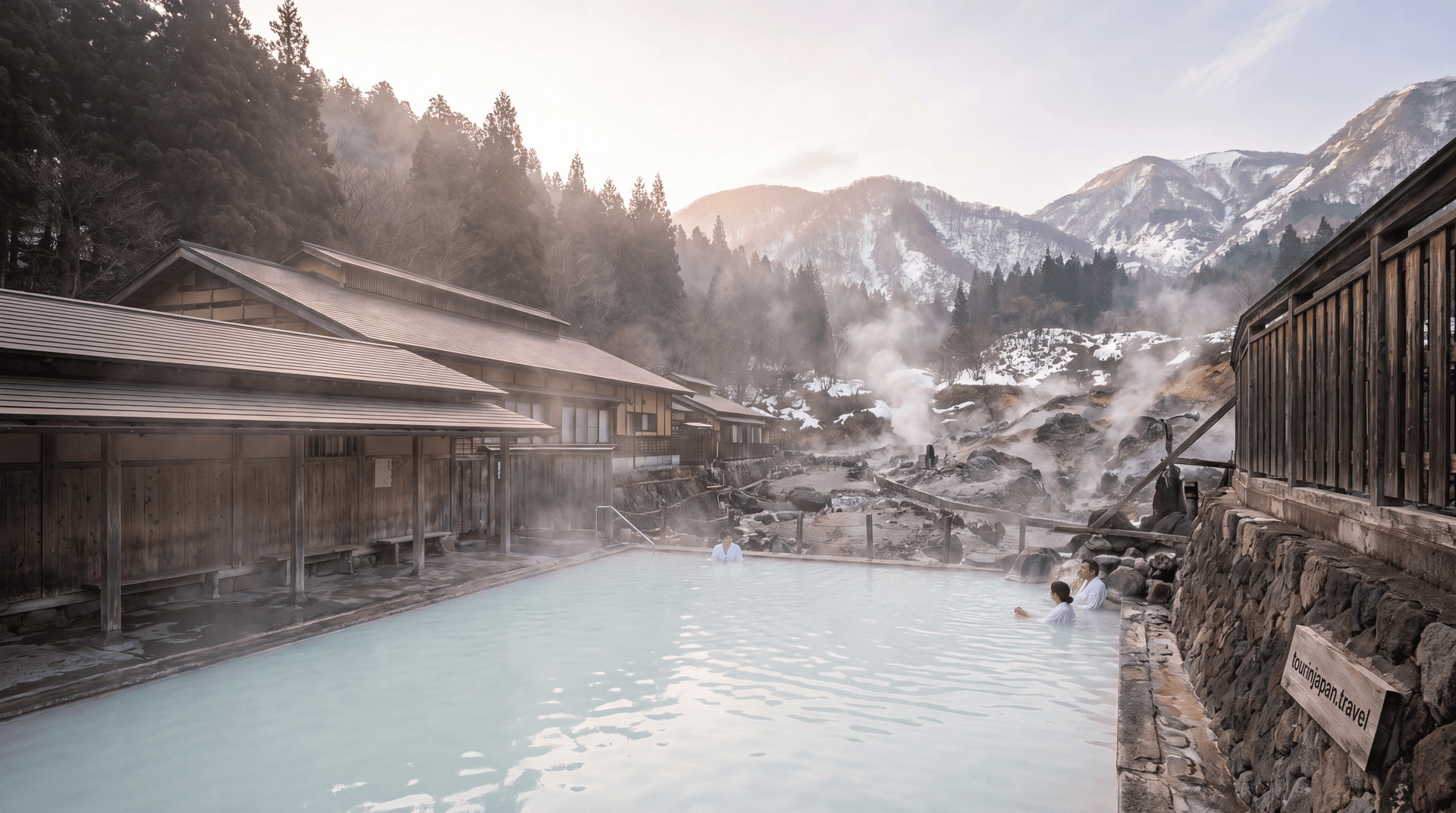
Nyuto Onsen, deep in the mountains of Akita Prefecture near Tazawako (Japan's deepest lake), consists of just seven small ryokan each built around a different spring source. The inns are strung along a forest road, separated by several kilometers of beech and cedar woods, and each has its own distinctive water chemistry — milky white sulphurous water at Tsurunoyu, clear sodium bicarbonate at Magoroku, and iron-tinged rusty water at Ganiba. No two baths in this valley taste or smell the same.
Tsurunoyu Onsen, the oldest and most photogenic of the seven, features thatched roof buildings over 300 years old and a famous mixed-gender open-air bath where milky white water fills a stone-edged pool surrounded by trees. Reservations are essential and fill months in advance for weekend stays. Day-use bathing at most Nyuto inns costs 500-800 yen and can be combined using a 1,800 yen all-day bus pass from Tazawako Station.
Ginzan Onsen: The Snowy Mining Village
Ginzan Onsen in Yamagata Prefecture is perhaps Japan's most photographed hot spring village after Shirakawa-go. A narrow canyon carved by the Ginzan River holds a dozen multi-story Taisho-era (early 20th century) wooden ryokan, their gas lanterns reflected in the stream at night and buried to their second floors in winter snow. The silver mining town atmosphere — ginzan means silver mountain — survives intact because road width restrictions prevent tour buses from reaching the main street.
Ginzan's water is a simple sodium chloride spring, but the setting transforms the experience entirely. Free public foot baths (ashiyu) line the riverside promenade. A day visit from Yamagata or Oishida stations is possible, but staying overnight is the only way to experience the village after the day-trippers leave — when the lanterns glow and steam rises from the narrow alleys, the atmosphere is magical.
Osorezan: Japan's Most Spiritual Onsen
Osorezan (Mount Fear) in Aomori Prefecture is one of Japan's three most sacred places, a volcanic landscape around Lake Usori that Buddhist tradition identifies with the realm of the dead. The lake's shore is littered with stone jizo statues dressed in pinwheels and red bibs, left by grieving parents for lost children. The active sulphur vents, bizarre rock formations, and acidic turquoise lake create a landscape unlike anything in ordinary Japan.
Amid this eerie landscape, simple public baths are available within the Entsuji temple grounds for around 500 yen. The water is extremely acidic — the lake itself is too acidic to support fish — and highly therapeutic for skin conditions. Bodai no Yu offers a simple bathing facility, and several basic lodgings within the temple grounds allow overnight stays. The access road is only open May through November due to heavy snow.
Practical details for Tohoku onsen travel
- Access: Tohoku Shinkansen runs to Sendai (90 min from Tokyo), Morioka (2 hrs), and Shin-Aomori (3 hrs); local buses or taxis reach onsen from these hubs
- Best season: January-March for snow bathing; late April-May for budding green forests with fewer crowds
- Nyuto Onsen access: shuttle bus from Tazawako Station (40 min, 1,800 yen all-day pass); or rent a car
- Ginzan access: bus from Oishida Station (30 min, 600 yen one way)
- Osorezan access: bus from Mutsu City (40 min); open May to late November only
- Cash recommended: many Tohoku ryokan and public baths are cash-only
- English: limited — bring a translation app and basic Japanese phrases
Combining Tohoku Onsen in a Single Trip
A six-to-seven day Tohoku onsen loop from Tokyo works well: Shinkansen to Yamagata, one night in Ginzan, train to Akita, one night in Nyuto, Shinkansen north to Shin-Aomori, day trip to Osorezan, then shinkansen back to Tokyo. This itinerary covers all three major destinations and still leaves time for a ramen detour in Aomori or a market visit in Morioka.
Stay Connected in Japan
Yesim eSIMs work on arrival — no physical SIM needed. Japan data plans from $5.