
Best Onsen in Kyushu: Beppu, Yufuin, and Kurokawa Compared
By Tour in Japan editors · Updated
Kyushu is Japan's onsen heartland. Compare Beppu's dramatic hells, Yufuin's romantic inns, and Kurokawa's hidden forest baths to find your perfect hot spring.
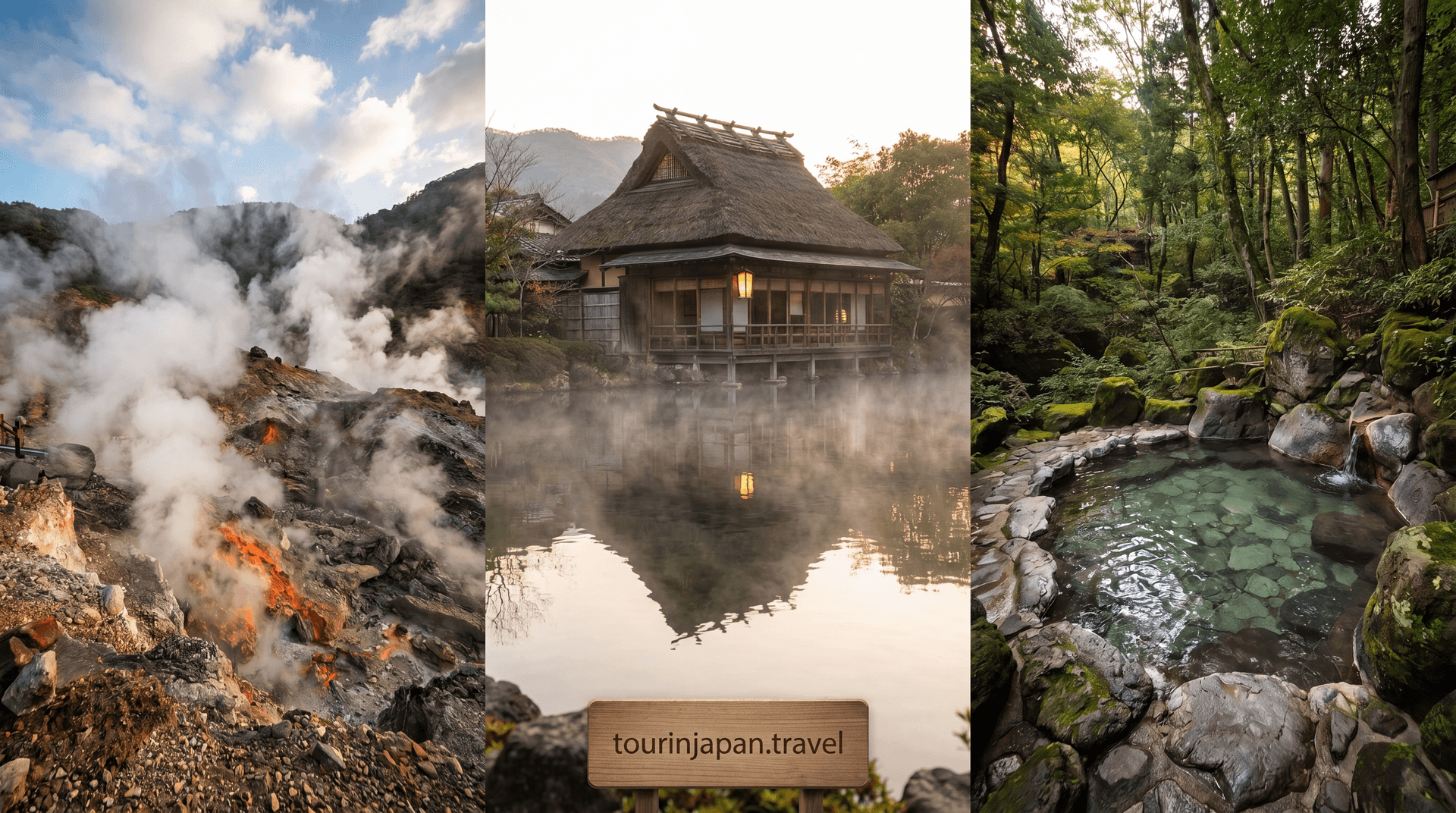
The best onsen in Kyushu rival any hot spring destination in Japan, and the island produces more geothermal water than anywhere else in the country. Three towns dominate the conversation: Beppu, the largest and most dramatic; Yufuin, the most romantic and design-conscious; and Kurokawa, the most secluded and atmospheric. Each draws a different type of traveler, and understanding their distinct characters helps you choose where to spend your precious bathing days.
Beppu: Steam, Drama, and Scale
Beppu, located on the eastern coast of Oita Prefecture, is the undisputed heavyweight of Japanese onsen tourism. With over 2,900 hot spring sources and more geothermal output than any other city on earth after Yellowstone, Beppu produces such quantities of steam that the city skyline perpetually disappears in white vapor. The famous Jigoku Meguri (hell tour) visits seven spectacularly colored hot spring pools — the cobalt-blue Umi Jigoku (Sea Hell), the blood-red Chinoike Jigoku (Blood Pond Hell), and the mud-bubbling Boshorigoku are the most striking.
For actual bathing, Beppu's eight onsen districts (the Beppu Hatto) offer a variety of water types from simple hot spring to mud bath, sand bath, and steam bath. Takegawara Onsen, a Meiji-era bathhouse with tatami sand baths for around 1,500 yen, is a must. Most public bathhouses charge just 100-300 yen for entry, making Beppu one of Japan's most accessible onsen cities.
Yufuin: Boutique Luxury and Mountain Views
Yufuin sits in a basin ringed by mountains, most famously double-peaked Yufu-dake, with morning mist pooling in the valley in a way that feels painted. The town built its reputation not on scale but on quality — excellent ryokan, high-end cuisine, galleries, and craft shops line the main Yunotsubo Kaido lane. The hot spring itself is simple sodium chloride water, clear and odorless, but the setting and accommodation elevate the entire experience.
Top ryokan in Yufuin include Sanso Murata, where open-air baths overlook rice paddies, and Yufuin Floral Village for a more accessible mid-range experience. Day-use bathing at Shitan-yu, a lakeside public bath beside Lake Kinrin, costs just 200 yen and offers one of the most picturesque soaks in Kyushu. Yufuin is best accessed by the scenic Yufuin no Mori limited express train from Hakata, a 2-hour journey through green hills.
Kurokawa: The Rotenburo Village
Kurokawa Onsen, set deep in a forested valley in Kumamoto Prefecture, represents a different philosophy entirely. The 30-odd small ryokan here agreed decades ago to standardize their exteriors, remove vending machines and neon signs, and invest in rotenburo (outdoor baths) surrounded by the natural forest. The result is perhaps Japan's most harmonious hot spring town — each inn sits beside a stream, and electricity poles are buried underground.
Kurokawa offers a unique nyuto tegata system — a wooden bath pass (1,500 yen) that allows access to any three rotenburo at different inns. This means you can bathe at Yamamizuki's riverside cave bath, Okunoyu's overhanging cliff-edge pool, and Ikoi Ryokan's cedar-enclosed bath all in one afternoon. Reservations are essential, and many inns require a minimum two-night stay on weekends.
Side-by-side comparison
- Best for budget travelers: Beppu — public baths from 100 yen, cheap guesthouses and hostels available
- Best for romance: Yufuin — boutique ryokan, beautiful lake, art galleries, mountain backdrop
- Best for nature and seclusion: Kurokawa — forest setting, river sounds, no crowds
- Best variety of bath types: Beppu — mud, sand, steam, and seven different spring types
- Best for solo travelers: Beppu — easy to navigate, plenty of day-use public baths, vibrant town center
- Best bath-hopping: Kurokawa — the nyuto tegata pass lets you sample multiple ryokan baths in a single day
Getting There and Combining Destinations
Beppu and Yufuin are easily connected — the scenic Yufuin no Mori train runs between Hakata and Beppu, stopping at Yufuin. A logical itinerary spends one night in Yufuin and one in Beppu. Kurokawa requires a detour — buses run from Beppu and from Kumamoto, with journey times of 90-120 minutes. The most rewarding approach loops all three: fly into Fukuoka, train to Yufuin, bus to Kurokawa, bus to Beppu, then shinkansen back to Fukuoka.
Stay Connected in Japan
Yesim eSIMs work on arrival — no physical SIM needed. Japan data plans from $5.