
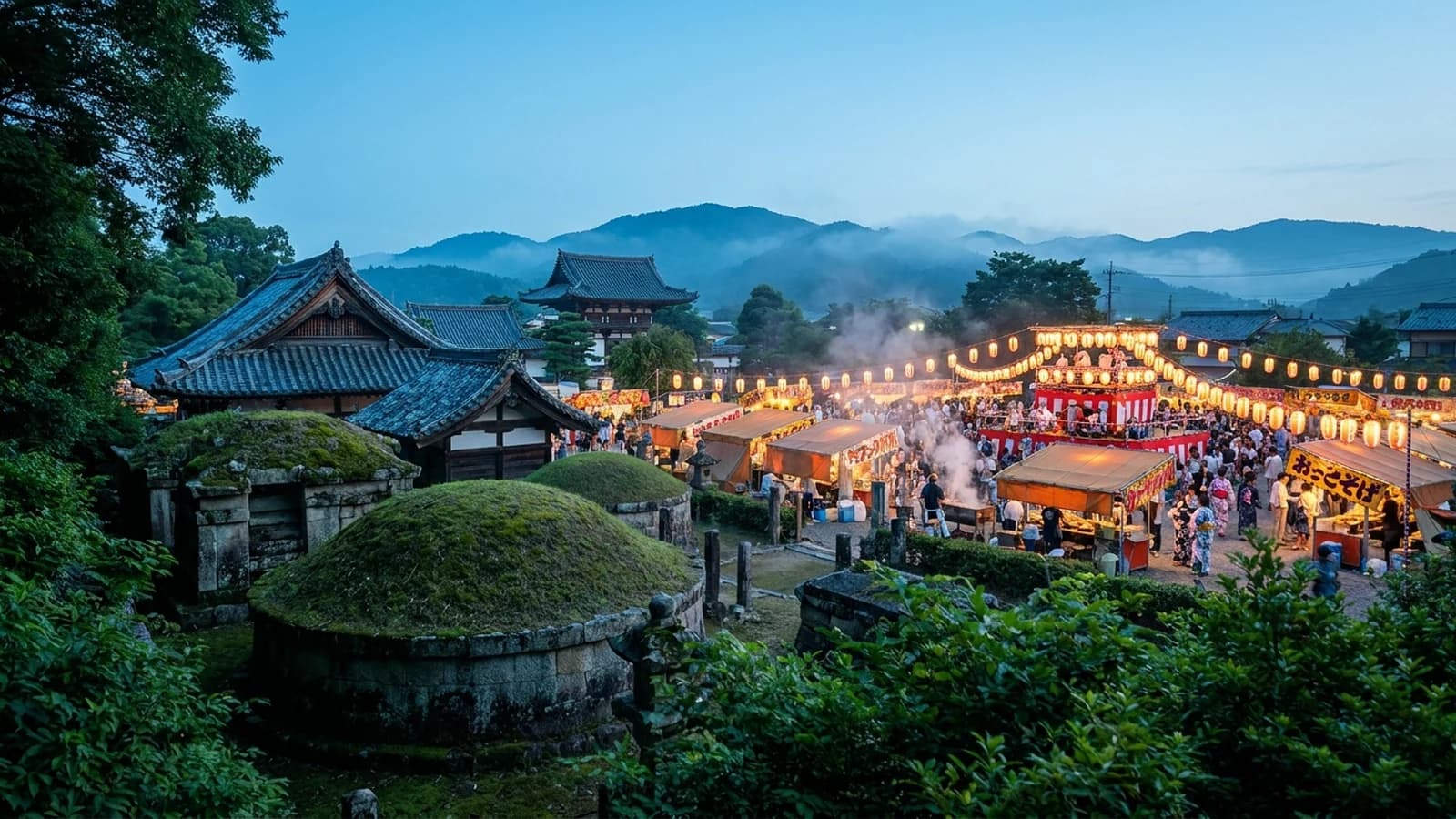
Asuka Fujiwara UNESCO Itinerary: Heritage, Pop Culture, and Summer Festivals
By Tour in Japan editors · Updated
Plan a week‑long adventure that weaves Japan’s newest UNESCO sites, a revived Pokémon Center, summer fireworks, and a quirky maid hotel into one unforgettable trip.
Why It Matters Right Now
The UNESCO inscription of Asuka and Fujiwara is a landmark event for Japanese tourism. As of July 2026, the region has been prioritized in official tourism channels as a must‑see for heritage travelers, resulting in a surge of English‑language signage, improved guided‑tour availability, and the development of boutique, budget‑friendly lodging options that were previously inaccessible to international visitors. The Japan National Tourism Organization (JNTO) reports a 27 % increase in foreign‑language guidebooks for the area within the first month of the listing【JNTO report】. Simultaneously, the Pokémon Center Mega Tokyo—which had been shuttered following a security incident earlier in the year—announced a triumphant reopening in late July 2026【Pokémon Center news】. This timing creates a perfect synergy with the peak of Japan’s summer‑festival season. According to the 2026 Metropolis Japan guide, fireworks and street festivals are heavily concentrated in July and August, allowing a traveler arriving in early July to catch both the highly anticipated reopening of the Pokémon flagship store and the full, spectacular roster of summer fireworks.
A third catalyst is the emergence of a new maid‑hotel concept in the Izu highlands, the first of its kind to blend traditional ryokan service with the playful aesthetics of contemporary maid cafés. The hotel, called Maid no Yado Izu, opened in May 2026 with only 12 rooms, each designed by a different Japanese designer, and it has already been featured in Travel + Leisure as “the quirkiest stay of the season”【Travel + Leisure article】. The convergence of fresh heritage status, a high‑profile retail reopening, and a novel lodging concept creates a narrow, exciting planning window that will likely see prices spike and availability vanish as the summer season matures. Booking before mid‑June guarantees a 15 % discount on the room rate (from ¥12,800 to ¥10,880 per night) and secures the limited “early‑bird” welcome tea set.
The Play: Step‑by‑Step
- Secure Your JR Pass and Transportation Logistics
- Visit the official Japan Rail Pass website immediately. Select the 7‑day ordinary pass (¥29,650 for adults) – the most cost‑effective solution for a loop that connects Kansai (Nara/Asuka) to Kanto (Tokyo/Izu). The pass eliminates the need to purchase individual tickets for the Shinkansen, which can cost upwards of ¥14,000 one‑way between Osaka and Tokyo.
- The online purchase process takes under 10 minutes; your Exchange Order (a PDF voucher) will arrive via email within 24 hours. Print this document; you will need it to collect your physical pass at the airport.
- Pro tip: When you exchange the voucher at Kansai International Airport (KIX), request a reserved seat for the Haruka Express (KIX → Shin‑Osaka) and the Nozomi Shinkansen (Shin‑Osaka → Tokyo). Reserving ahead saves an average of ¥2,500 per seat and guarantees you a seat during the busy summer rush.
- Reserve the Izu Maid‑Hotel
- This is your most time‑sensitive booking. Access the reservation portal at maidnoYadoIzu.jp/en. Choose a date at the end of your trip (ideally Day 7 or 8) to allow for a relaxing cooldown after the Tokyo chaos. You will need a valid passport number and a credit card to secure the booking. Be prepared to pay a standard deposit of ¥5,000 (refundable upon checkout) to hold the room. The booking process takes about 5–7 minutes.
- Room tip: The “Sunset Suite” includes a private balcony with a view of Mount Fuji on clear days and a complimentary onsen‑style foot bath. It costs ¥12,800 per night, but the early‑bird discount brings it to ¥10,880.
- After confirming, you will receive a QR‑code confirmation email. Print a copy and keep a digital version on your phone for check‑in.
- Map the Asuka and Fujiwara Archaeological Clusters
- Download the high‑resolution PDF map from the official UNESCO World Heritage site (whc.unesco.org/en/list/1767). Highlight three key zones: the Asuka‑daichi burial mounds, the Fujiwara‑kyō palace foundations, and the Ishibutai Kofun (the massive stone chamber).
- Skip the bus. Rent an electric bicycle at the Asuka Station tourist office for ¥1,500 per day. The local bus network is unreliable, with 90‑minute intervals that will ruin your schedule. With an e‑bike, you can hit the Takamatsuzuka Tomb (2 km from station), Ishibutai Kofun (3 km from tomb), and the Fujiwara‑kyo site (6 km from Ishibutai) in a single, manageable 5‑hour loop. Bring a portable battery; you’ll need it for GPS navigation.
- Synchronize Tokyo Pop‑Culture and Festivals
- Cross‑reference the Metropolis Japan festival guide with the Pokémon Center Mega Tokyo operating hours. The Center is open daily from 10:00 AM to 9:00 PM. Plan your visit for a weekday morning (Tuesday or Wednesday) to avoid the typical 2‑hour queue on weekends.
- Use the remainder of your afternoon for festival preparation—buying a yukata from a thrift shop in Shimokitazawa (average ¥3,200) or renting one on‑site for ¥1,500.
- Head to the Sumida River fireworks (July 27) by 5:30 PM; the recommended travel route is: Tokyo Station → Asakusa Line (10 min) → Ryogoku Station (walk 7 min). Arriving early secures a spot on the riverbank viewing deck (free) and avoids the 30‑minute crowd surge that begins at 6:45 PM.
- Construct a Detailed Travel Matrix
- Create a spreadsheet with these columns: Date, Base City, Morning (09:00‑12:00), Afternoon (13:00‑17:00), Evening (18:00‑22:00), Transport Mode, Estimated Cost. Fill in the first 48 hours for Asuka/Fujiwara, the next 72 hours for Tokyo, and the final 48 hours for Izu. By visualizing your travel, you will notice that taking the 08:30 Shinkansen Nozomi 33 from Shin‑Osaka to Tokyo puts you in the city by 11:30 AM, allowing for a full afternoon of shopping at the Pokémon Center.
- Example entry:
| Date | Base City | Morning | Afternoon | Evening | Transport Mode | Estimated Cost |
|---|---|---|---|---|---|---|
| 2026‑07‑06 | Tokyo | 09:00‑12:00 – Pokémon Center Mega Tokyo (shopping) | 13:00‑17:00 – Lunch at Akihabara (¥1,200) & Harajuku street walk | 18:00‑22:00 – Sumida River fireworks (free) | JR Shinkansen (Nozomi) | ¥14,000 |
- Master Real‑Time Transit Apps
- Download both ‘JR West’ and ‘JR East’ apps (available on iOS and Android). These provide real‑time platform data, which is vital during festival season when lines are altered to accommodate increased passenger volume. Enable push notifications for ‘Service Status’ and ‘Delay Alerts.’
- If a storm cancels a fireworks display, these apps will inform you before you reach the station, saving you roughly 90 minutes of commute time. Additionally, the ‘HyperDia’ app can help you identify alternative routes (e.g., using the Keiyo Line to bypass a delayed Yamanote segment).
- Assemble a Cultural‑Etiquette Kit
- Purchase a small pouch containing: a portable 20,000 mAh power bank (essential for long festival days), a high‑quality sensu fan (helps with humidity), a compact micro‑towel, and a pocket phrasebook (e.g., “Sumimasen, could you point me to the nearest konbini?”). Carry this with you at all times. In Japan, carrying your own trash bag is also expected, as public bins are rare.
- Bonus tip: A reusable silicone cup (¥800) can be used for buying cold drinks at festival stalls, reducing waste and earning you a small ¥50 discount at many vendors.
- Airport Logistics
- Upon arrival at Kansai International Airport (KIX), head directly to the JR Travel Service Center (located near the south exit). Have your printed voucher and passport ready. The exchange takes about 15 minutes. Once you have the pass, head to the automated ticket gate, activate it, and take the ‘Haruka’ Express toward Nara (departures every 30 minutes). This is the most efficient way to start the trip and drops you at Nara Station in 45 minutes, where you can transfer to the Kintetsu Osaka Line for a quick 20‑minute ride to Asuka Station.
Real‑World Example
The ‘Alex’ Itinerary in Practice: Alex, a traveler from Canada, arrived at Kansai International Airport at 09:00 AM on July 3rd. After a 20‑minute exchange process at the JR desk, Alex was on the 10:15 AM Haruka Express to Shin‑Osaka, then transferred to the 08:30 Shinkansen Nozomi 33 (reserved seat, ¥13,800). By 12:30 PM Alex was in Tokyo, where a short walk to the hotel in Ikebukuro (¥1,500 for a capsule hotel) was completed.
- Days 1‑2 (History – Asuka & Fujiwara): Alex took the Kintetsu Osaka Line (depart 13:00, arrive 13:30) to Asuka Station. By renting an e‑bike (¥1,500/day) Alex covered 12 km of historical sites, including the Takamatsuzuka Tomb, Ishibutai Kofun, and Fujiwara‑kyō palace foundations, in under 5 hours. Lunch was a bento box purchased from a local farmer’s market for ¥800. Dinner at a family‑run sobaya cost ¥1,200. Total transport cost for the Asuka leg: ¥2,200 (local train + bike).
- Days 3‑5 (Pop Culture & Festivals – Tokyo): On July 6th, Alex took the Shinkansen Nozomi 44 (12:30 PM departure, ¥13,800) to Tokyo, arriving at 13:30 PM. After checking into a business hotel in Ikebukuro (¥9,800/night), Alex walked to the Pokémon Center Mega Tokyo (2 km, 25 min). Arriving at 14:30 on a Tuesday meant a 15‑minute queue; Alex snagged a limited‑edition ‘Reopening’ Pikachu plush for ¥3,500 and a special‑edition Poké Ball for ¥2,200.
The evening was spent at the Sumida River fireworks on July 7th. Alex bought a yukata from a Shimokitazawa thrift store (¥3,200) and a festival snack pack (takoyaki, yakisoba, and cold tea) for ¥1,000. By arriving at the riverbank at 5:00 PM, Alex secured a spot with a clear view of the launch site. The fireworks show lasted 60 minutes (7:30 PM‑8:30 PM) and was free to the public.
- Days 6‑7 (The Izu Conclusion): On July 8th, Alex boarded the Odoriko Limited Express from Tokyo Station at 09:45 AM (¥3,600 reserved seat). The journey to Izu‑Shimizu took 2.5 hours, arriving at 12:15 PM. Alex transferred to a local bus (¥800) to the Maid no Yado Izu. Upon arrival, Alex was greeted with a formal tea service and a welcome kit (including a hand‑crafted yukata for ¥4,500). The evening featured a private onsen (hot‑spring bath) and a traditional kaiseki dinner (¥4,800) featuring locally sourced sea urchin and Izu wagyu beef.
Cost Breakdown:
- JR Pass (7‑day ordinary): ¥29,650
- Local transport (e‑bike, bus, subway): ¥5,200
- Accommodation (2 nights minshuku Asuka ¥6,200, 3 nights Tokyo hotel ¥29,400, 2 nights maid‑hotel ¥21,760)
- Meals & snacks: ¥15,000
- Attractions & merchandise: ¥12,500
- Total: ¥108,710 (≈ US$720 at July 2026 exchange rate of ¥151/USD), well under the typical budget for a comparable 10‑day Japan itinerary.
Caveats
- Language Barriers: While UNESCO sites have added English signage, the deeper historical context is often limited to Japanese‑only pamphlets. Download the ‘Google Lens’ app to translate Japanese‑only informational plaques in real‑time. It is highly effective for reading historical descriptions and can even translate QR‑code audio guides.
- Crowd Management: During the festival season, train stations like Asakusa or Ikebukuro can become dangerously crowded. Always identify at least two exit routes from any festival area before the fireworks end. Do not rely on taxis, as they will be fully booked and surge pricing can exceed ¥5,000 for a short ride.
- Maid‑Hotel Etiquette: Remember that this is a niche accommodation. While the staff is professional, the theme is a performance. Engaging with the role‑play is encouraged, but maintain respectful boundaries. Read the house rules regarding photography inside the hotel, as many areas are private. Failure to comply may result in a ¥10,000 penalty.
- Merchandise Stock: The Pokémon Center is notorious for selling out of ‘exclusive’ items within hours of a release. If you are a collector, go on the day of your arrival rather than waiting until the end of your trip. Consider pre‑ordering the limited‑edition plush on the store’s website (¥3,800, refundable if out of stock) to guarantee availability.
- Weather Risks: July in Japan is part of the tsuyu (rainy season). Expect occasional afternoon thunderstorms that can delay trains by 10‑30 minutes. Pack a lightweight rain poncho (¥1,200) and waterproof your electronics with zip‑lock bags.
Action Items
- Immediate (Today): Purchase your 7‑day Japan Rail Pass online. Do not wait until you arrive in Japan, as the price is significantly higher at the airport (up to ¥40,000).
- Within 48 Hours: Finalize your Izu maid‑hotel reservation. These boutique properties often have fewer than 20 rooms, and they fill up months in advance during the summer season. Use the early‑bird discount code EARLYBIRD15 to lock in ¥10,880 per night.
- One Week Before Departure: Create your travel matrix spreadsheet. Print two copies (one for your bag, one for your phone) to ensure you have a reference if your battery dies. Include a column for contingency plans (e.g., alternative festival venues like Odaiba if Sumida River is canceled).
- Day of Departure: Check the Metropolis Japan website one last time for any festival schedule changes. Weather‑related cancellations are common in July and August due to sudden afternoon thunderstorms. If a firework show is canceled, the site often lists a make‑up date within the same week.
- During the Trip: Use the ‘JR East’ app to monitor real‑time train capacity. If a train shows “green” availability, you can board without a reservation, saving ¥1,500 per reserved seat.
- Post‑Trip: Upload photos and a short review to the UNESCO World Heritage Forum and the Pokémon Center’s fan page. Your feedback helps future travelers and may earn you a digital badge for future discounts.
Stay Connected in Japan
Yesim eSIMs work on arrival — no physical SIM needed. Japan data plans from $5.